It’s your first time in Rome, you only have 24-hours in Rome, and want to know what is actually worth your time? Let me help you out.
That question is harder than it sounds because Rome has enough ancient ruins, fountains, piazzas, churches, restaurants and neighborhoods to fill a week, let alone one day. But, this is a full one-day Rome itinerary designed to hit a lot of the major sights in a short amount of time. It is definitely a busy day, but that’s intentional. If this is your first time in Rome and you want to see as much as possible, this gives you a way to do it without spending your precious 24-hours figuring out where to go next.
I’ve been to Rome several times, most recently spending about 36 hours there before heading off on a Mediterranean cruise with Holland America. So if I had just 24 hours in Rome, this is exactly how I’d spend them. You’ll see the big sights, eat some of my favorite foods, have time for gelato, wander through some of Rome’s most beautiful piazzas and finish with dinner. And if that sounds like too much for one day, that’s easy to fix. Pick the stops that excite you most, skip the rest and enjoy Rome at your own pace.
Short on Time? Here Are My Top Hotel Picks & Planning Tips for Rome
24-Hour Itinerary at a Glance
- 7:30 am | Coffee & Croissant at La Biga
- 8:30 am | Colosseum (and Roman Forum)
- 11:00 am | Spanish Steps
- 11:45 am | Trevi Fountain
- 12:15 pm | Lunch at Pane e Salame
- 1:15 pm | Gelato at Pompi
- 1:45 pm | Pantheon
- 2:45 pm | Piazza Navona
- 3:15 pm | Castel Sant’Angelo
- 4:15 pm | Vatican Museums
- 6:30 pm | Aperitivo in Trastevere
- 7:30 pm | Dinner at MASTO a Testaccio
- Overnight at NH Collection Roma Palazzo Cinquecento (or find other hotel deals here)
Where I Stayed & Recommend
- NH Collection Roma Palazzo Cinquecento, best for an upscale stay with easy access to Termini Station; this is where I stayed
- Camplus Hotel Roma Centro ($$), a more budget-friendly option near Termini Station, I’ve stayed here too!
- Hotel Diocleziano ($$), another comfortable choice near Termini Station
- Passepartout ($$), best for travelers who want to stay in a more central, historic area
- Albergo delle Regioni ($$), best for a budget-friendly stay in the heart of Rome near the Trevi Fountain
- Navona Style ($$$), best for staying in a stylish, central location near Piazza Navona
- Hotel Nazionale ($$$), best for a classic Roman hotel in a central location near the Pantheon.
Fun Tours to Take
- Colosseum, Roman Forum & Palatine Hill Guided Tour
- Explore Rome on a Guided Golf Cart Tour
- The Ultimate Trastevere Food Tour with a Loca
- Rome Underground: Catacombs Tour, Aqueducts and Appian Way
Day Trips
- Assisi and Orvieto from Rome: an Epic Day Tour in Umbria
- Orvieto and Civita di Bagnoregio Full Day Private Tour from Rome
Getting Around
There is no way around it: you will walk a lot. On my latest 24-hour visit, we logged about 21,000 steps, even while using plenty of public transportation. Rome also has lots of cobblestone streets, and some stairs can be slippery, so comfortable shoes with good traction are much more important than looking perfectly fashionable.
Your best bet is to purchase a ROMA 24H ticket, which includes buses, trams and the Metro. The ticket is valid for 24 hours from the first time you validate it and can be purchased at ATAC ticket machines, including those at Metro stations. I bought mine at Termini Station, and the machine walked me through the process on the screen, so it was pretty painless. The ticket cost was €8.50.
You can also purchase the ticket through the ATAC Roma app or use contactless Tap & Go at Metro stations and on public transportation. But, I found a little comfort in having the ticket in my purse.
They do have Uber and we used it twice on this trip, including once from the airport to our hotel around Termini station for €70. It’s convenient, but it can be expensive. Plus, for a longer trip such as Rome to Civitavecchia, we had trouble finding an Uber driver willing to make the journey, so a taxi stand worked better for us.
From Fiumicino Airport to Rome
If you’re flying into Fiumicino, the Leonardo Express is the easiest public-transport option to know. The non-stop train connects Fiumicino Airport with Roma Termini in about 32 minutes, and current Trenitalia information lists the fare at €14. Tickets can be purchased through Trenitalia, at ticket offices or self-service machines at the airport station, and the station is inside the airport.
At Fiumicino, follow the airport signs for the railway station/Treni. The station has Trenitalia ticket machines and a ticket office, so you don’t need to figure out a separate transportation system after landing.
Travel Tips
- My favorite Rome strategies: if jet lag is working in your favor and you’re already awake and out exploring before 7:30 a.m., take advantage of it. Head to the Spanish Steps and Trevi Fountain first, when the streets are noticeably quieter and you have a much better chance of enjoying these iconic spots without the wall-to-wall crowds. Then continue on with the itinerary.
- Book tours in advance. For popular experiences, use reputable booking sites such as Viator or GetYourGuide.
- Get an eSIM before you arrive. I use Airalo for international cell data.
- Renting a car? I use Discover Cars or Expedia to compare pricing from trusted rental companies.
- Book an airport transfer ahead of time. Kiwi Taxi is the airport-transfer service I’ve found reliable.
map of this Itinerary (Google maps)

24-Hour Rome Itinerary Details
Coffee & Croissant
Start early, really early, and head to La Biga Wine Food, directly beside the Colosseum on Via Nicola Salvi On my visit, we stopped here for a pistachio croissant and a couple of drinks. And I’ll be honest: this isn’t where I’d send you for the most memorable pastry in Rome. You’re here for the backdrop. There’s something pretty special about sitting with a cup of tea while the Colosseum is right there in front of you.
If food is your priority rather than the view, consider stopping by Mercato Centrale instead. But for a one-day itinerary, I like using this stop as a gentle start to the morning and, more importantly, positioning you right where you need to be for the Colosseum.

Colosseum (and Roman Forum)
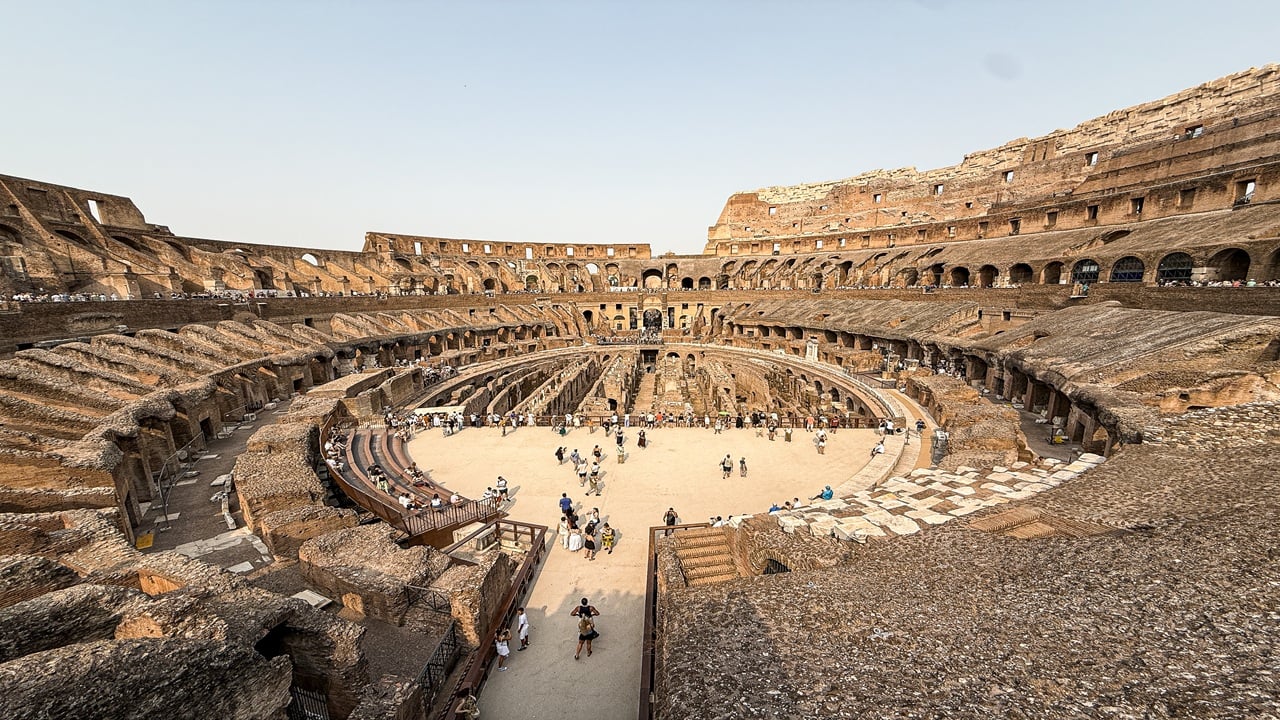
This is the stop I’d build the morning around, because The Colosseum is one place you don’t want to miss (or visit in the heat of the afternoon). The enormous amphitheater dates back to A.D. 80 and could hold tens of thousands of spectators that were there for gladiatorial contests, animal hunts, public spectacles and other entertainment for the people of ancient Rome.
What makes the Colosseum so fascinating isn’t just its size or age. You’re standing inside a building that was at the center of Roman public life nearly 2,000 years ago. It remains one of the world’s most recognizable ancient landmarks, which is why it consistently ranks among Rome’s most popular attractions. And why you want to pre-purchase your tickets online.
✨ I pre-bought our tickets well in advance through GetYourGuide because I didn’t want to take the chance that morning spots would be gone.
The standard combination ticket includes the Colosseum, Roman Forum and Palatine Hill. On my visit, however, it was a 101°F day, and even though we arrived early, I knew I didn’t want to spend hours walking through exposed archaeological ruins in that heat. We toured the Colosseum, took a quick look at the Roman Forum and skipped the longer Palatine Hill portion. That’s the kind of decision I want you to feel comfortable making on a 24-hour trip. You don’t get extra points for making yourself miserable. If you have cooler weather and more energy, spend longer exploring the Forum and Palatine Hill. If it’s brutally hot, don’t feel guilty about shortening this portion. The Colosseum itself is the priority.
✨ If you want a more in-depth Colosseum experience, there are also ticket options that add special areas of the Colosseum, including the underground levels and arena floor. I recommend this tour that has options for both: Colosseum 3-In-1 Tour with Underground Option


Getting from the Colosseum to Spanish Steps: Bus —You can walk, but it’s about 30 minutes and you’ve already got a long day ahead of you. I recommend taking the bus (if you bought a 24-hour transit pass, it’s included!).
Spanish Steps
The Spanish Steps are famous for good reason, but I don’t think you need to treat them as a major time-consuming attraction. The staircase was built between 1723 and 1726 by architect Francesco De Sanctis and consists of 11 ramps containing 12 steps each. It connects Piazza di Spagna with the church of Trinità dei Monti above. At the bottom, you’ll also find the Barcaccia Fountain, designed by Pietro Bernini and completed in the early 17th century.
People come here to climb the steps, photograph the dramatic staircase and spend time in Piazza di Spagna. It’s one of those places where the setting itself is the experience.
Give yourself about 30 minutes. Walk up, look back over the piazza, take your photos, enjoy the architecture, and then move on.


Getting from the Spanish Steps to Trevi Fountain: Walk — It’s roughly a 10 minute walk.
Trevi Fountain
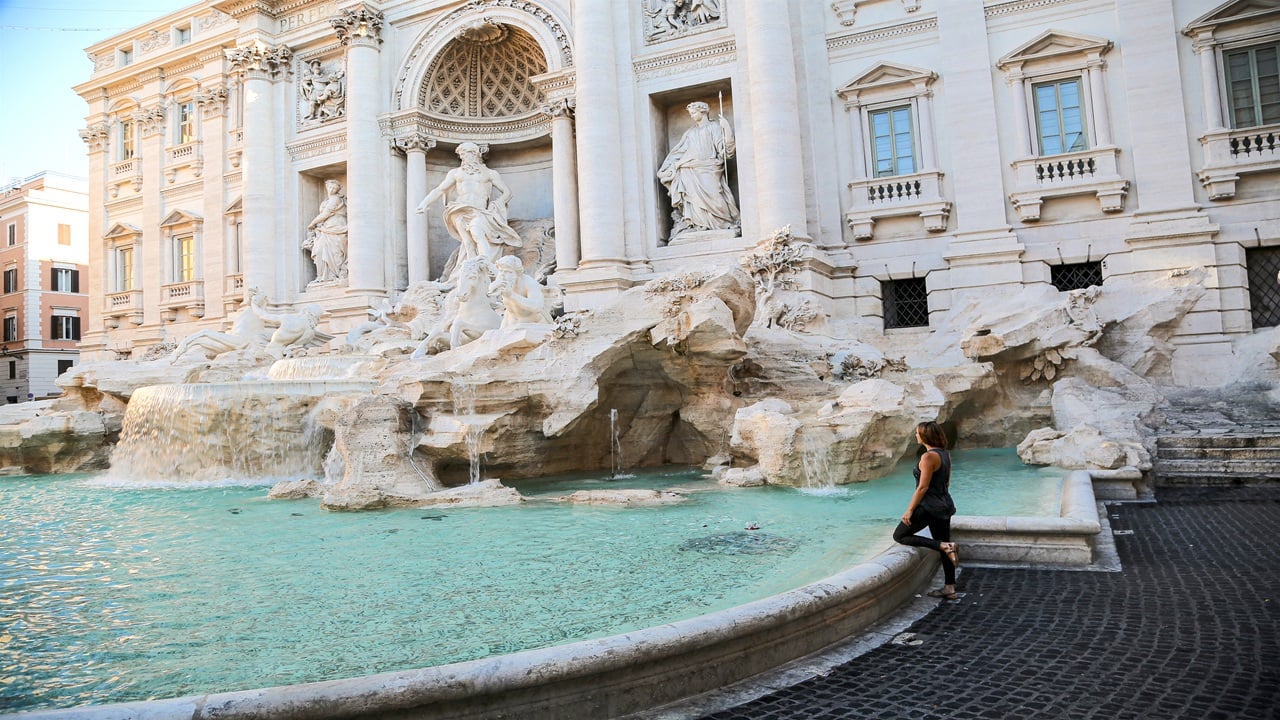
By now you’ve reached one of Rome’s most recognizable sights. The Trevi Fountain was designed by Nicola Salvi and completed by Giuseppe Pannini in the 18th century, from 1732 to 1762. It features Oceanus riding a shell-shaped chariot and has become one of Rome’s defining landmarks (its appearance in the movie La Dolce Vita helped!)
There’s one important change to know before you go: non-residents need a €2 ticket to enter the area immediately around the fountain. The fee applies from 9 a.m. to 10 p.m.; viewing the fountain from the surrounding square remains different from entering the basin area.
And yes, patience is required. If you want that perfect photo, you’re going to have to work for it. But this is another place where your timing makes a huge difference. If you’re willing to get up before 7 a.m., I’d actually move Trevi ahead of the Colosseum. The fountain can be dramatically quieter in those very early hours (and entering the basin area is FREE at that time).
Take your photos, toss in your coin if that’s your tradition, admire the fountain and then keep moving. You don’t need an hour here.


Getting from Trevi Fountain to Pane e Salame: Walk — This is an easy transition because your lunch stop is very close to Trevi Fountain.
Lunch at Pane e Salame
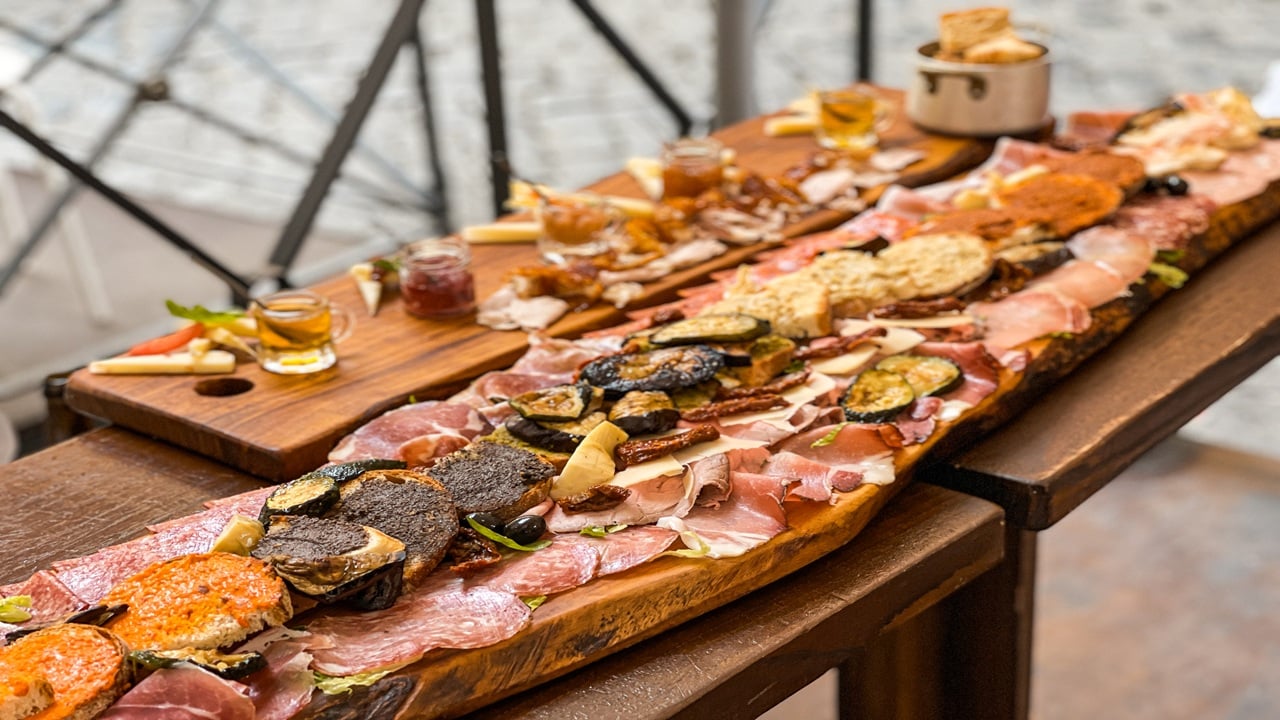
Pane e Salame is one of my Rome staples and I come here every time I’m in the city. The restaurant is known for its Italian sandwiches, cured meats, cheeses and ginormous sharing boards. We always order the large charcuterie board, which comes loaded with meats, cheeses and bruschetta topped with things like a delicious red pepper spread. On my latest trip, we also tried the tuna salad, and it was surprisingly delicious.
There is one catch: it’s tiny, and people line up. I recommend getting there at least 15 minutes before opening if you want a good chance of being among the first seated. That’s much easier than trying to squeeze into a packed restaurant when you’re working with a sightseeing schedule.
If there is already a line and you need to keep moving, don’t stress. There are plenty of other casual lunch options. I recommend trying Barretta Pesce e Porchetta or I Pizzicaroli Roma.


Gelato at Pompi
You don’t need a long break after lunch, just enough time for something cold and sweet. Pompi is conveniently right next door to Pane e Salame, making this one of the easiest stops of the entire day. They are known for desserts (including tiramisu!), along with gelato and other sweet treats. On this trip, I had to get my obligatory pistachio gelato, another little ritual I repeat whenever I’m in Italy. But, you do you.
Pantheon
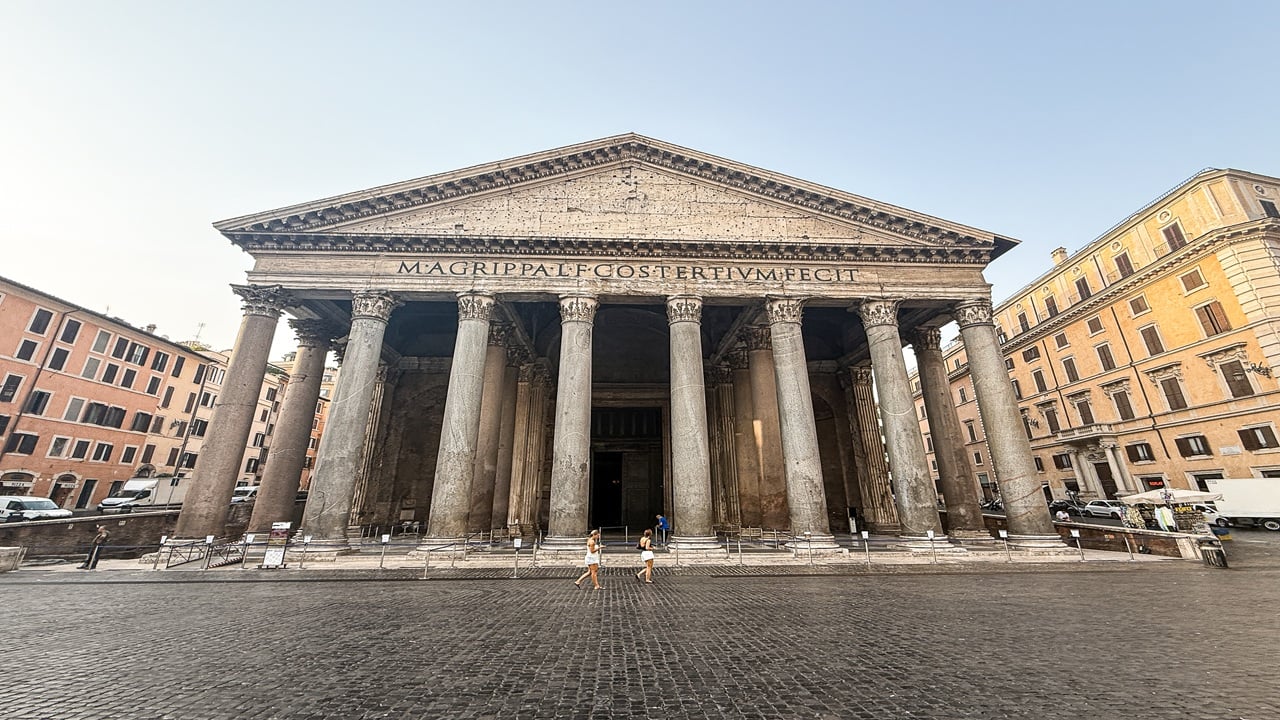
The Pantheon is one of those places where I think you should actually step inside rather than simply photograph the exterior. Originally built as a Roman temple and later converted into a basilica, the building is best known for its enormous dome and central oculus. It’s also remarkably well preserved compared with many ancient structures.
I’d allow around 45 minutes here. You don’t need to rush through it, but you also don’t need to spend half your afternoon inside.
Getting from the Pantheon to Piazza Navona: Walk — It’s about a 5-7 minute walk
Piazza Navona
If you want to see the more theatrical, over-the-top side of Rome, this is one of my favorite piazzas. The square was built on the site of the ancient Stadium of Domitian, but what you’ll see today is classic Baroque Rome, with beautiful buildings, fountains and the Church of Sant’Agnese in Agone surrounding the piazza.
The star of the show is definitely Bernini’s Fountain of the Four Rivers in the center. The four enormous marble figures represent the Danube, Ganges, Nile and Rio de la Plata, symbolizing the four major rivers of the continents known at the time. There are also two smaller fountains, the Moor Fountain and Neptune Fountain, at either end of the square.
But honestly, you don’t need to know all of that to enjoy Piazza Navona. Walk the length of the piazza, admire the fountains, look up at the architecture and watch the people around you.


Getting from Piazza Navona to Castel Sant’Angelo: Walk — Around 15–20 minutes depending on your route and pace.
Castel Sant’Angelo
Castel Sant’Angelo gives you a completely different perspective on Rome because the building itself has had several lives. Originally constructed as a mausoleum for Emperor Hadrian, it was later transformed into a fortress and eventually a papal residence and military structure. Its position beside the Tiber also makes it one of the city’s most recognizable silhouettes.
You can tour the interior, but on my visit we simply walked around the exterior. And honestly, after this many stops, I think that’s a perfectly reasonable choice.
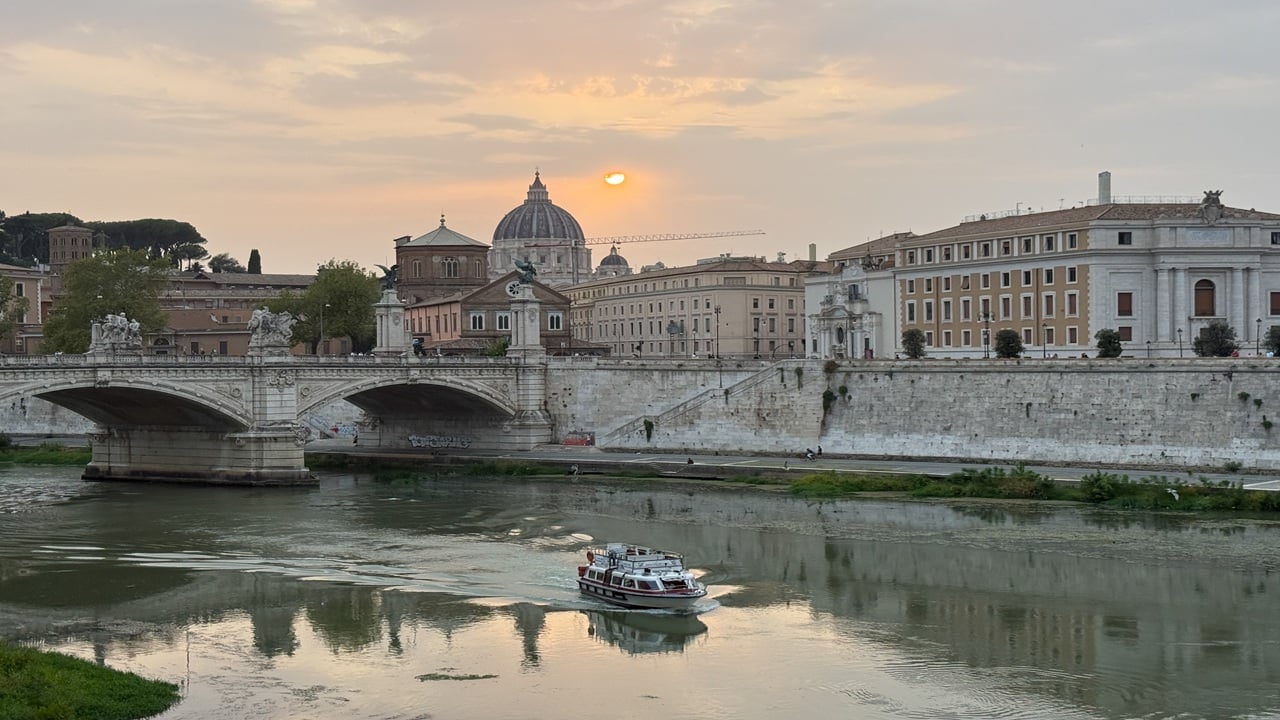
The castle is also connected to the historic center by Ponte Sant’Angelo, the bridge lined with angel sculptures. If your timing works, the bridge is a beautiful place to pause toward sunset. Another option is Ponte Sisto, especially if you want to continue toward Trastevere for an aperitivo or you’re trying to position yourself closer to Testaccio for dinner.
Because you’re doing a 24-hour trip, I would make the interior optional rather than essential. If you’re running behind, admire the castle from outside and keep going.


Optional Add-On: Vatican Museums
If seeing the Vatican Museums and Sistine Chapel is high on your Rome bucket list, you can add it to this itinerary. But I’m going to give you permission to skip it.
The Vatican Museums are enormous, with collections built up by the popes over centuries. What began as papal collections grew into one of the world’s most important museums, filled with ancient Roman and Greek sculpture, Renaissance paintings, tapestries, maps and beautifully decorated rooms. Some of the most famous areas include the Raphael Rooms, Gallery of Maps and, of course, the Sistine Chapel. The museum’s collections span thousands of years of art and history, so there is far more here than you could possibly see in a short visit.
The big draw for many visitors is the Sistine Chapel, where you can see Michelangelo’s famous ceiling frescoes and The Last Judgment. Your Vatican Museums admission includes the Sistine Chapel, so you don’t need to purchase a separate ticket for it.
Why would I add it? If you’re an art, history or religious-history person, this may be one of the highlights of your entire trip. There is something pretty incredible about standing in rooms decorated by artists like Michelangelo and Raphael and seeing works that have influenced Western art for centuries.
But here’s the catch: this is not a quick little stop you squeeze in between the Trevi Fountain and lunch. The museums are huge, and even a focused visit involves a lot of walking and taking in a tremendous amount of art. Adding the Vatican means you’ll be moving quickly through the rest of Rome and spending a significant chunk of your 24 hours inside a museum.
So my advice is simple: if your personality is “I came all this way and I want to see EVERYTHING,” add it. If you’d rather wander Rome, stop for a leisurely lunch, linger in a piazza and enjoy the city without constantly checking your watch, skip it.
If you decide to go, buy your tickets in advance and choose your entry time when you book. The official Vatican Museums ticket includes admission to both the museums and Sistine Chapel, and the Vatican specifically recommends purchasing through its official ticket portal.
Aperitivo in Trastevere
If you still have some energy left in the evening, consider crossing the Tiber to Trastevere for an aperitivo before dinner. This is one of my favorite neighborhoods in Rome for simply wandering around. Its cobblestone streets, ivy-covered buildings, little piazzas and lively restaurant and bar scene give you a different feel from the grand monuments and busy streets of the historic center.
Trastevere means “across the Tiber,” and the neighborhood has a long history as a more working-class part of Rome. Today, it has become one of the city’s most popular areas for eating, drinking and enjoying the evening.
For a classic Roman experience, Bar San Calisto is one of the neighborhood’s longtime favorites. It’s casual, inexpensive and very popular, so don’t be surprised if it’s packed. Personally, I prefer the idea of Da Biagio Vini e Oli if you’re looking for somewhere a little cuter and more relaxed.
Just remember that this is an optional add-on. Adding Trastevere and dinner in Testaccio to an already packed 24-hour Rome itinerary can make for a very long evening. If your feet are screaming at you by this point, skip the aperitivo and go straight to dinner.
Dinner at MASTO a Testaccio
By the time you get to dinner, you’ve earned a proper Roman meal. My pick is MASTO in the Testaccio neighborhood. It is a small restaurant, wine bar and salumeria, and it’s exactly the kind of place I like ending a busy day. Testaccio is known for its deep connection to traditional Roman food culture, and MASTO feels much more intimate and local than some of the restaurants you’ll find right around Rome’s biggest tourist attractions. The restaurant focuses on classic Roman dishes, Italian wines and meats and cheeses from its salumeria counter.
We loved the saltimbocca alla romana with potatoes and the eggplant parmigiana. And then there’s the tiramisu. I honestly think it was the best tiramisu I’ve ever had in Italy. Yes, I realize that’s a very bold statement. But I stand by it.
Tip: Definitely make a reservation online. It’a small restaurant, so I wouldn’t leave dinner to chance. If you’d rather stay in Trastevere for dinner, that’s another option. We’ve eaten at Tonnarello Scala and enjoyed it, and there are plenty of restaurants and wine bars to choose from there.


Back to the Hotel
It’s been a long day, so after dinner I would keep the evening simple and head back to the hotel. For this itinerary, we stayed near Termini Station which was great from a public transportation standpoint. I stayed at NH Collection Roma Palazzo Cinquecento, and the location makes sense for a short Rome visit — especially if you’re arriving by train, catching an early train, or continuing onward to a cruise.
➞ Camplus Hotel Roma Centro is my more budget-friendly alternative in the same general area. Or check the best hotel deals here.
Traveling Soon? Use my Favorite Resources for Booking Your Trip!
Book Your Flight
Expedia is my favorite flight search engine, because it checks dozens of airlines so you can easily find the best fare deals. You can also select ‘Watch Prices’ to get an email alert when the prices change.
Book Your Accommodations
I use both Booking.com and Expedia for hotels, because each offers a couple different hotel choices and I like to compare the reviews on each one. If you have a group or are looking for more of a home atmosphere, head over to VRBO or AirBNB that has houses, apartments and even just a room for rent in every price range.
Book Your Rental Car
If love the freedom to explore like I do, driving from place to place is the best option! I always book with RentalCars.com (it’s part of booking.com) for the best prices and top brand options.
Book Some Fun Tours!
Viator and Get Your Guide are my go-to search engines for cool bucket list experiences! Each one can have different tours, so check both—why limit yourself, right?
Don’t Forget Travel Insurance
Travel can be unpredictable. Whether it’s a last-minute cancellation, an injury, or (ugh) theft, things happen. That’s why I recommend never leaving the country without travel insurance. Here are my faves: Safety Wing and World Nomads.
Get Packing & Travel Essentials Ready
Check out the Bucket List Journey Amazon Store to find all my favorite travel essentials. Everything from Packing cubes, to travel adapters and toiletry containers to walking shoes.
Flying International?
Get Cell Data Before You Arrive: I recommend using airalo for international travel. Also, book an airport transfer in advance (I use Kiwi Taxi). Lastly, check travel.state.gov for visa requirements and safety information.
Save this Post to Pinterest