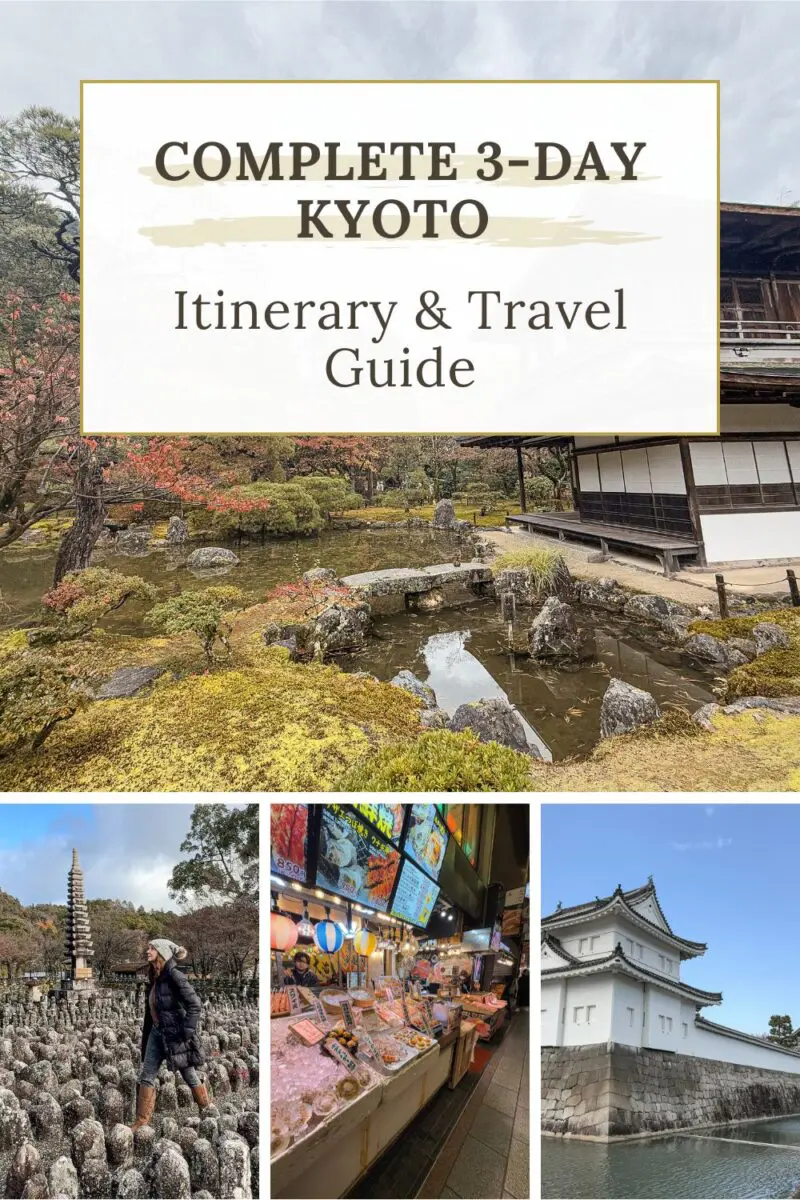
Once you’ve finished your things to do in Tokyo list, let me gently nudge you just a couple hours away, because some of Japan’s most unforgettable experiences are waiting in Kyoto. Hop on the bullet train and in about 2.5 hours, you’ll trade Tokyo’s neon buzz for a city filled with centuries-old temples, peaceful tea houses, and a food scene that I’m still dreaming about.
In this guide, I’m sharing exactly how I would plan the perfect 3-day itinerary for Kyoto, based on my own experience. You’ll learn what to see, what to do, and (very importantly) where to eat.
Itinerary (Perfect for First Timers)
Day 1: Temples, Cherry Paths & Old Kyoto Evenings
- Visit Ginkaku-ji
- Walk Philosopher’s Path
- Go to Nanzen-ji Temple
- Stop at Tenjuan Temple
- Lunch at Hikiniku to Come or Kyoto Tonkatsu Katsuda Shijokarasuma
- Visit Nijo Castle
- Wander Hanamikoji Street, Shirakawa Canal and Pontocho Alley
- Grab Drinks at Bar Liquor Museum Pontocho
- Have Dinner at Ashioto
Day 2: North + Arashiyama (Bamboo Forest)
- Quick Stop at Kimono Forest
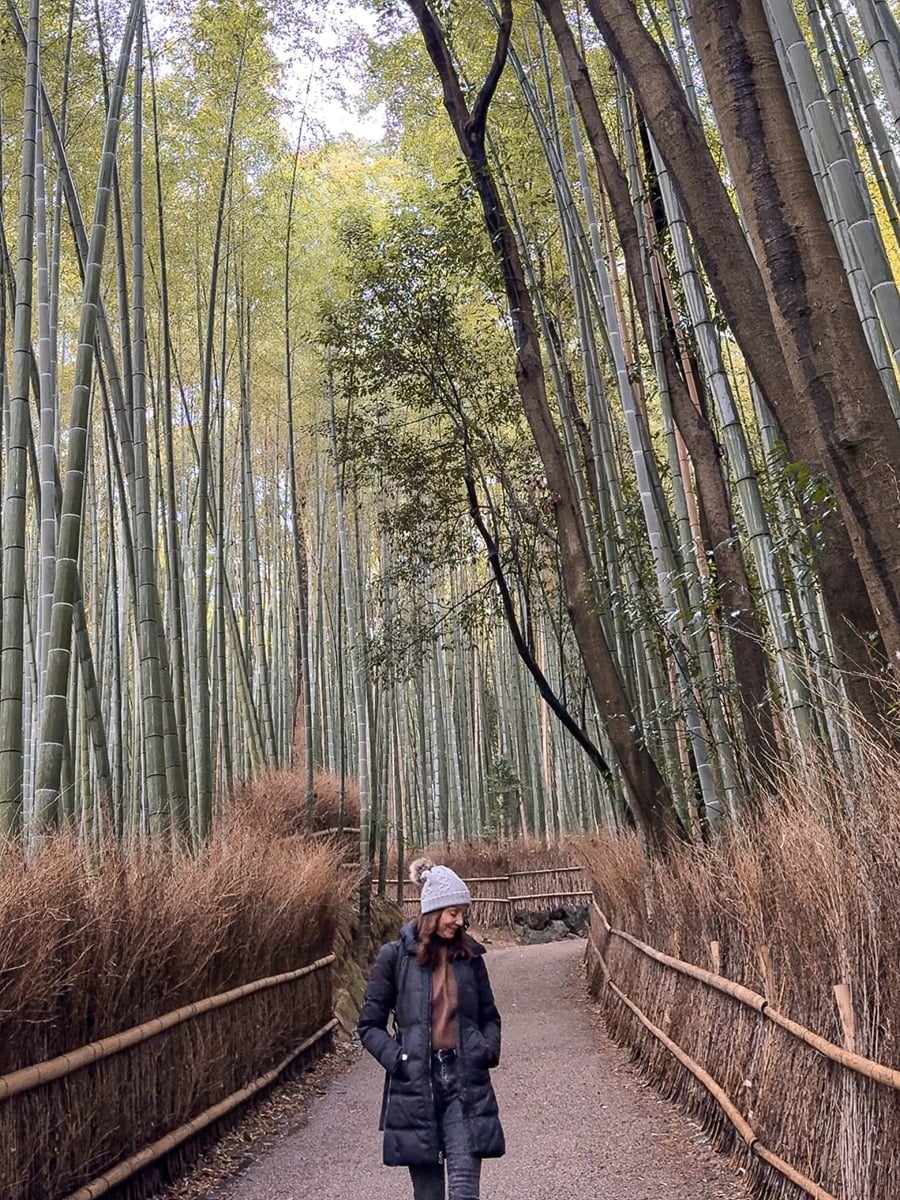
- Walk Through the Arashiyama Bamboo Grove
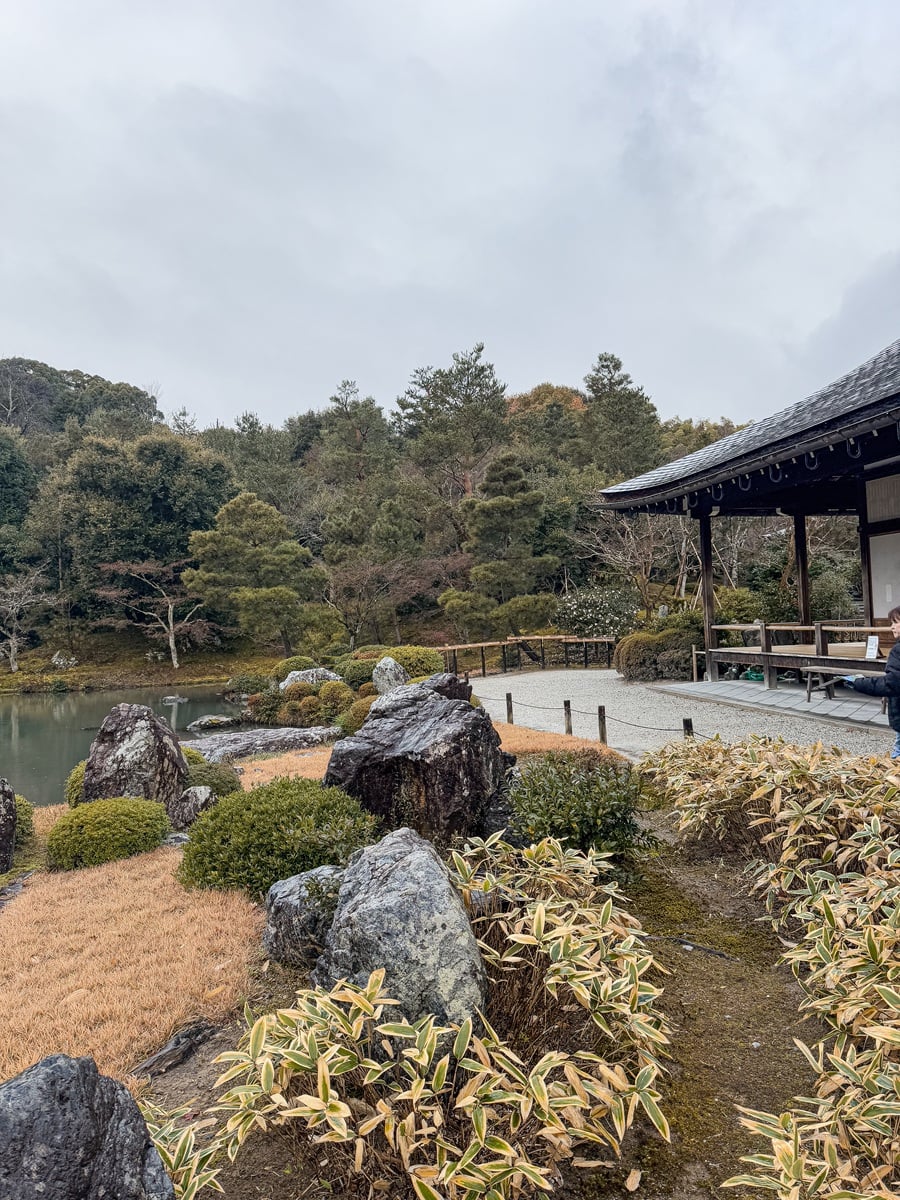
- Visit Tenryu-ji Garden
- Have Lunch at Dangoro
- Go to Otagi Nenbutsuji Temple
- Stroll Saga Toriimoto Street
- Visit Adashino Nenbutsuji Temple
- Stop at Gio-ji
- Go to Kinkaku-ji
- Dinner at Noodle shop Rennosuke
Day 3: Shopping + Eating
- Wander Through Fushimi Inari-Taisha
- Get Matcha Pancakes at nota Dorayaki & Black Tea
- Snack at Nishiki Market
- Buy Souvenirs at Teramachi Shopping Street
- Got a matcha latte at the hidden cafe in Le Labo Machiya perfumery
- Late Lunch at MOTOI Gyoza
- Rokujuan for treats
- Wander Ace Hotel Shopping Courtyard
- Dinner at Nakashimaya
Kyoto Travel Planning Guide
Best Time to Visit
The short answer is that spring and fall are hard to beat. That said, Kyoto is a year-round destination, and there’s really no bad time to go. It just depends on whether you want to brave the weather or the crowds.
The most popular months (and the busiest) are March through May and October through November, when the weather is comfortable and the scenery is at its peak. Spring brings those dreamy cherry blossoms (late March to mid-April), while fall delivers rich autumn colors and that crisp, cozy air.
Summer (June through August) is hot and humid, but still doable if you take breaks and stay hydrated (and don’t let the rainy season scare you—it’s typically not constant rain). Winter is colder, but much quieter, with fewer crowds and better hotel prices.
I’ve actually been to Japan several times in December, and there were way fewer people. It was a bit chilly, but honestly not bad at all once you bundle up.
How Many Days to Spend in Kyoto
If it’s your first time in Kyoto, give it at least three days. That’s enough to make stops at the highlights and with a little planning, you can even fit in a quick day trip to Nara to see the local deer. But if you can stretch it to five days, Kyoto begins to feel different. You’re no longer moving from one landmark to the next, you can take the longer route on purpose.
Where to Stay in Kyoto
If it’s your first visit, I usually suggest staying somewhere central so you’re close to many of the main sights, and downtown Kyoto would be the best option for that. With that said, Kyoto’s public transportation is very easy to use, so you can comfortably explore no matter where you stay.
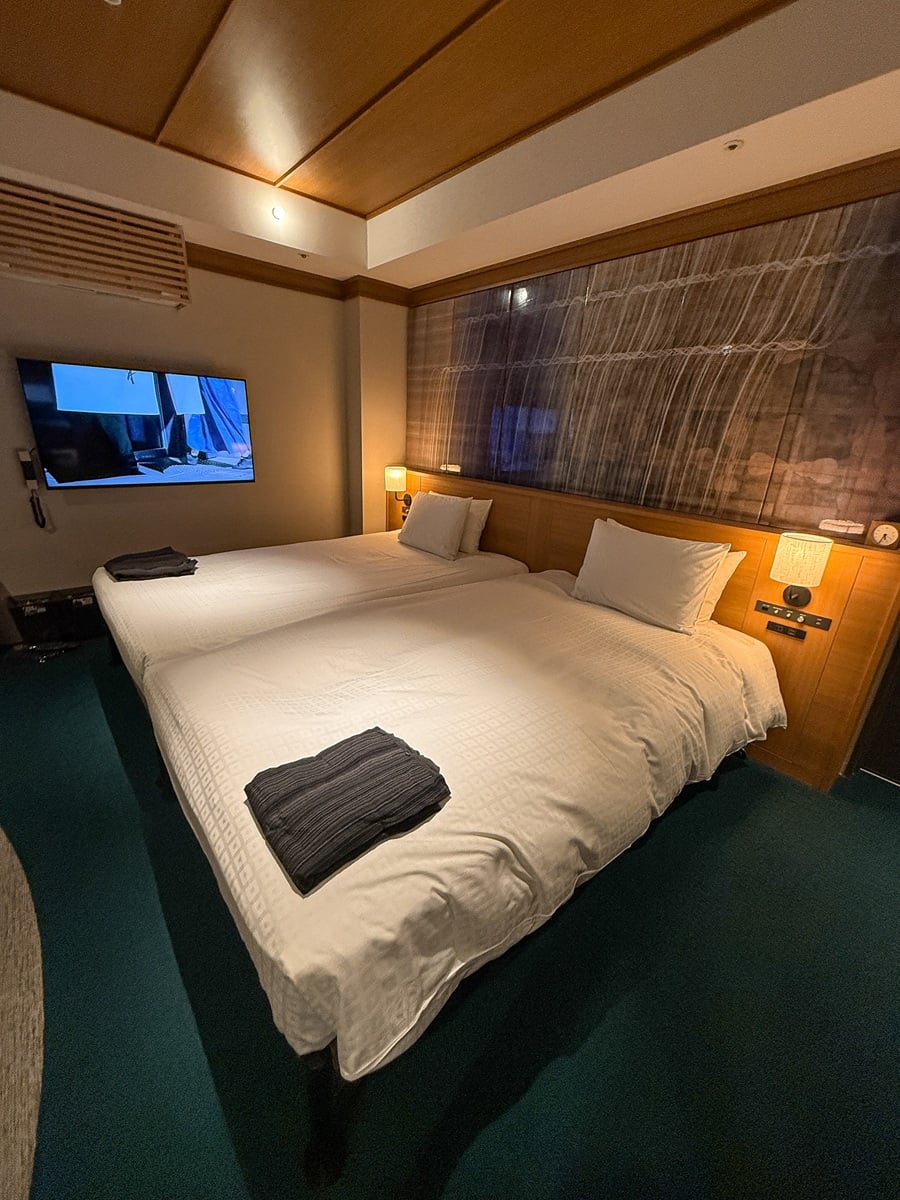
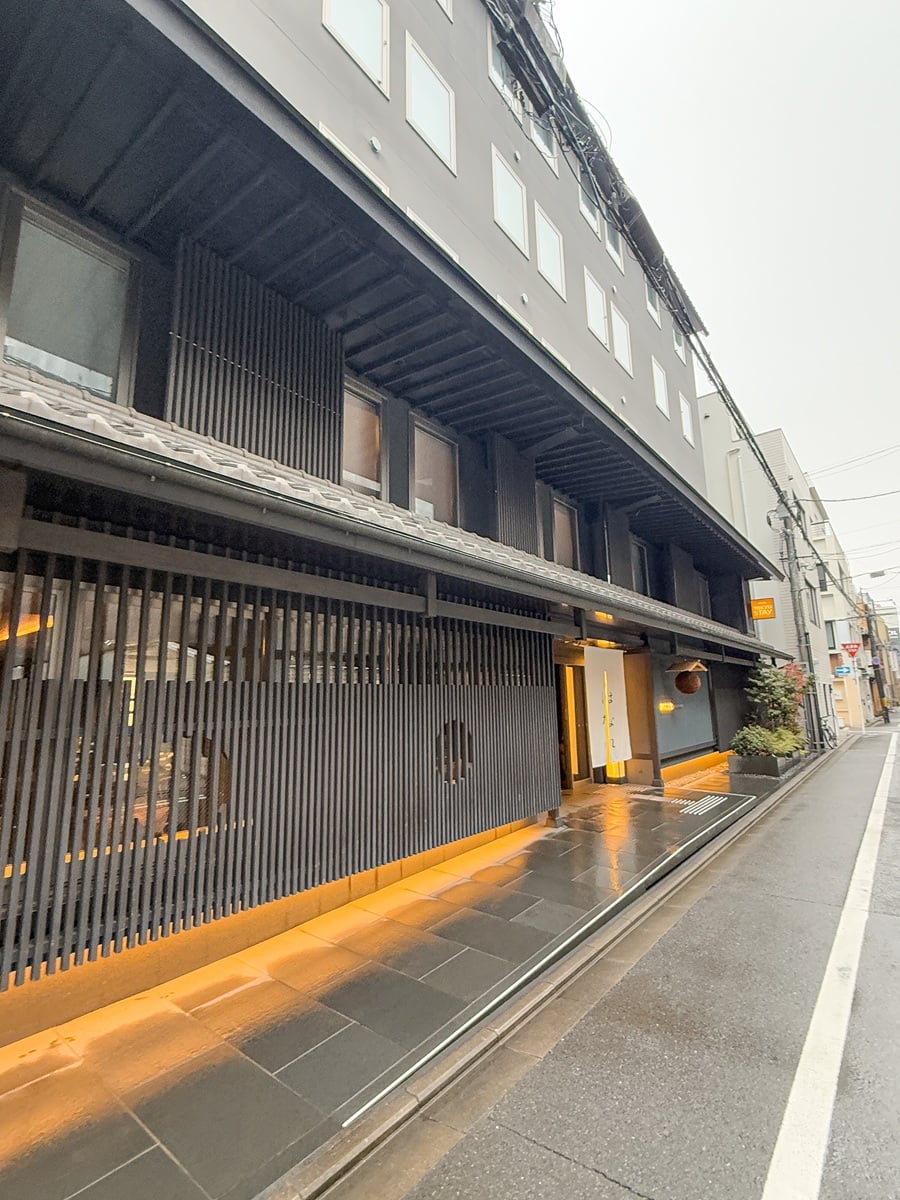
I stayed at HANARE by Tokyu Stay Kyoto Sanjo ($$) in central Kyoto, and it ended up being such a great home base for exploring the city. It was close to the subway, but also only a 15 minute walk to Nishiki Market.
The room was surprisingly spacious for Japan, plus there’s a small kitchenette with a microwave, sink, and fridge, plus a modern bathroom with a rain shower that felt like a little luxury at the end of the day. But what I loved most? The washer and dryer that made packing so much easier (especially if you’re trying to travel lighter). They also had a sake happy hour and free Japanese snacks, which felt like a fun little bonus.
Other Hotel Options
- Reikaku Yasaka ($$$$): A refined machiya stay in Gion that blends historic charm with modern luxury, complete with elegant interiors, a private garden, and a prime location near Yasaka Shrine.
- Sowaka ($$$$): A beautifully restored ryokan turned boutique hotel offering minimalist design, exceptional service, and a peaceful retreat right in the heart of Gion.
- Hotel The Celestine Kyoto Gion ($$$): A serene, upscale hotel with traditional design touches, a relaxing public bath, and a quiet location just steps from Kyoto’s historic streets.
- insomnia KYOTO OIKE ($$): A relaxed and stylish hotel that’s welcoming and comfortable, making it an easy, no-fuss base after long days of exploring Kyoto.
- Nohga Hotel Kiyomizu Kyoto ($$): A design-forward hotel blending contemporary style with local art and craft, plus a rooftop bar and a great location near Kiyomizu-dera and Higashiyama.
Before You Go
Documents Needed
Before you go, fill out your immigration and customs forms through Visit Japan Web. You’ll get a QR code that makes arriving in Japan so much smoother.
Helpful Apps
Suica: Download Suica app on your phone and then add it to your Apple Wallet through the app. You can add it directly to your wallet without downloading the app, but when I tried that, I wasn’t able to load money and kept getting errors. Though, if you like, you can try that first with these wallet instructions.
Once it’s set up, it’s incredibly easy. You can load money with Apple Pay and to use it you just tap your phone at subway gates, buses, vending machines, and even some shops. You don’t even need to open the app. For detailed instructions, see the JR-East website.
Google Translate: Every time I am in Japan I rely heavily on the Google Translate app. While many people speak some English, plenty don’t—and menus, signs, and even things like your hotel thermostat may only be in Japanese. The camera feature alone is worth it!
Go Taxi: GO Taxi is basically Japan’s version of Uber, except it calls licensed taxis instead of private cars. The best part is you can see your fare upfront, which takes away any guesswork. I used it right after landing at Haneda Airport and it was completely stress-free.
Quick tip: taxi doors open and close automatically, so don’t try to do it yourself. I may have made that mistake once or twice.
Google Maps: Google Maps will be your best friend in Kyoto. I used it everywhere, and it never failed me. It tells you exactly which train or bus to take, how long each leg will take, and even how far you’ll be walking between stations. It takes so much of the stress out of figuring things out in a new place.
A few real-life tips that made a big difference for me:
- If you have luggage, select the wheelchair-accessible route option. This will guide you to elevators instead of stairs. Otherwise, you may find yourself hauling a suitcase up and down more steps than you’d like.
- Try to avoid rush hour with big luggage. Trains get very crowded, and space is tight.
- Once you’re on board, place your luggage near the train doors where there’s usually a bit more room.
And if things don’t go perfectly, that’s okay. It happens. If you get on the wrong train, just hop off at the next stop and reassess. I can’t tell you how many times I said to my husband, “I need a minute,” and stepped off to the side to regroup.
Getting to Kyoto from Tokyo by Bullet Train (Shinkansen)
The most popular way to get to Kyoto from Tokyo is on the bullet train. Why? Because, not only is it a bucket list experience, going by a local train could take up to five times as long. The Shinkansen takes you 450km in about 2 hours and 15 minutes.
I booked all of our bullet train tickets using the SmartEX app, and I would do it the same way again in a heartbeat. Yes, you can absolutely buy tickets at the station, but I’ve learned over the years that my travel days go a whole lot smoother when I remove as many “figure it out on the fly” moments as possible (especially when I’m tired, holding a suitcase, and just want to get where I’m going).
Here are a few tips I picked up along the way that made the experience feel easy instead of overwhelming:
- Reserve your seats in advance. It’s not required, but if you want control over where you sit (and trust me, you might), it’s worth it.
- For that Mount Fuji moment, choose seats D or E when traveling between Tokyo and Kyoto (either direction). On a clear day, you might get a fantastic Mount Fuji view.
- Luggage is doable, but plan ahead. The overhead racks can fit a decent-sized suitcase if you can lift it. If your bag is over 160cm, you’ll need to reserve a seat with luggage space (booking the last row is ideal, because it has extra luggage space directly behind it, but those seats go quickly).
- Arrive about 20–30 minutes early. Stations like Tokyo and Kyoto are wonderfully efficient…and also a bit of a maze the first time through.
- Follow the signs for Shinkansen. At the station, follow signs for Shinkansen. Your train should have a number (and a name, like Hikari, Nozomi or Kodama) which you will see on the signs in the station and on the platform.
- On your train’s platform, each car number will be listed at each gate to enter the train, just find your car number and wait there.
- Don’t skip the food halls. Both Tokyo and Kyoto stations have incredible options. So, grab a bento box and snacks before boarding.
Getting Around
Getting around Kyoto can be done by subway, bus or taxi–we used all three! You can use your loaded Suica card for the subway and bus, the taxis can be booked and paid for in advance with the GoTaxi app. Many parts of the city are super walkable too.
Other Essential Tips
Language: Even though you’ll find that many people speak English, there are still plenty of moments, especially off the beaten path, where you might run into a bit of a language gap. So, I always recommend having Google Translate handy on your phone.
Currency: The local currency is the Japanese yen, and U.S. dollars aren’t typically accepted, so it’s worth planning ahead. I usually exchange a bit of money before leaving or withdraw cash at the airport when I land, just to make those first few hours feel easy and stress-free. Cash is often used at smaller restaurants, markets, and local shops. Otherwise credit cards are widely accepted.
Tipping: In Japan, tipping isn’t a thing, so don’t worry about leaving extra at restaurants, taxis, or hotels.
Safety: Kyoto is considered a very safe city in Japan, with low crime rates. Of course, it’s always smart to stay aware of your surroundings and take normal precautions, but you can feel comfortable exploring on your own.
For up-to-date travel advisories and safety tips, you can check the U.S. Department of State website here: travel.state.gov.
Best Things to do in Kyoto
Walk Philosopher’s Walk (Tetsugaku no Michi)
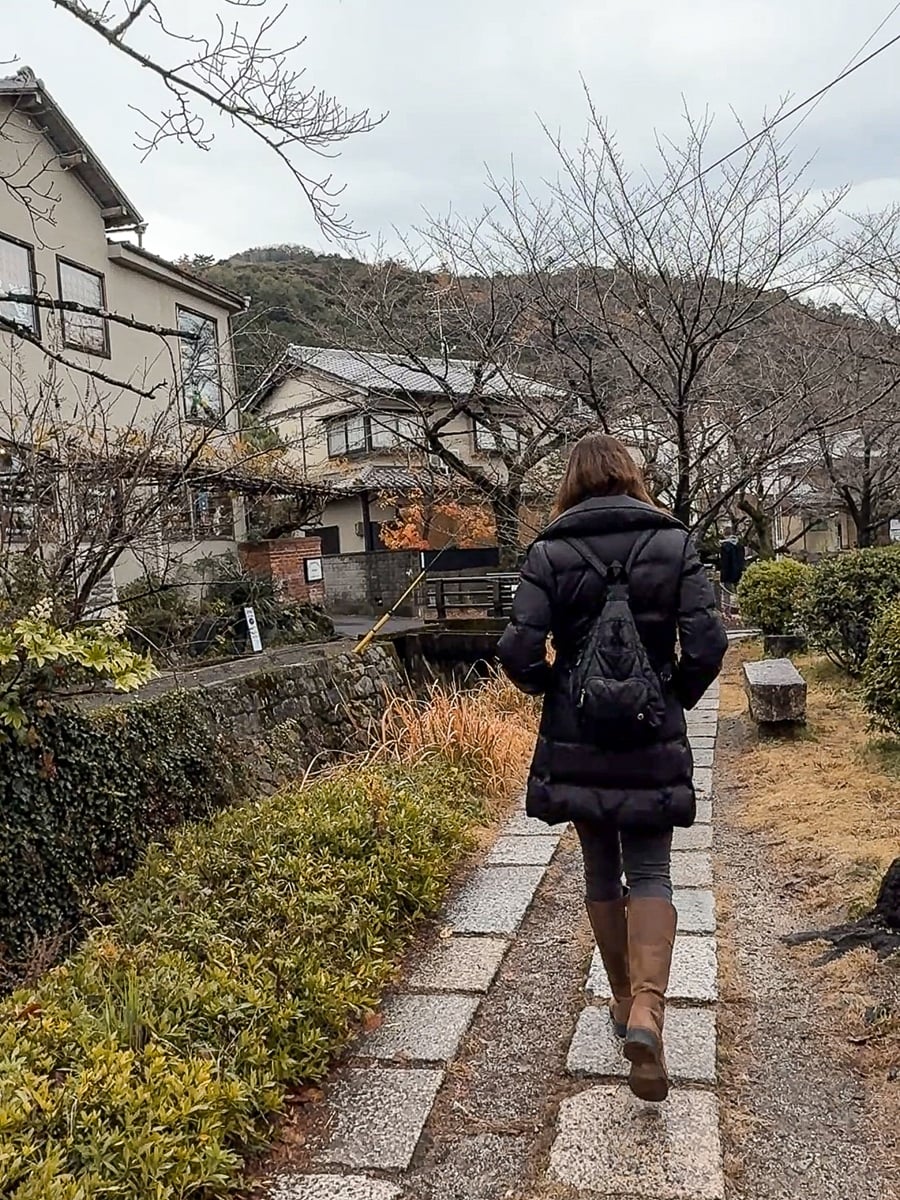
This ended up being one of those unexpectedly meaningful moments for me. The Philosopher’s Walk is a simple two kilometer walk along a canal that follows a route once used by physicist and philosopher Nishida Kitaro. When we went, locals stopped along the path to pray with us, and one kind artisan handed us tiny leaf boats to throw in the water for luck.
Visit Ginkaku-ji (Silver Pavilion)
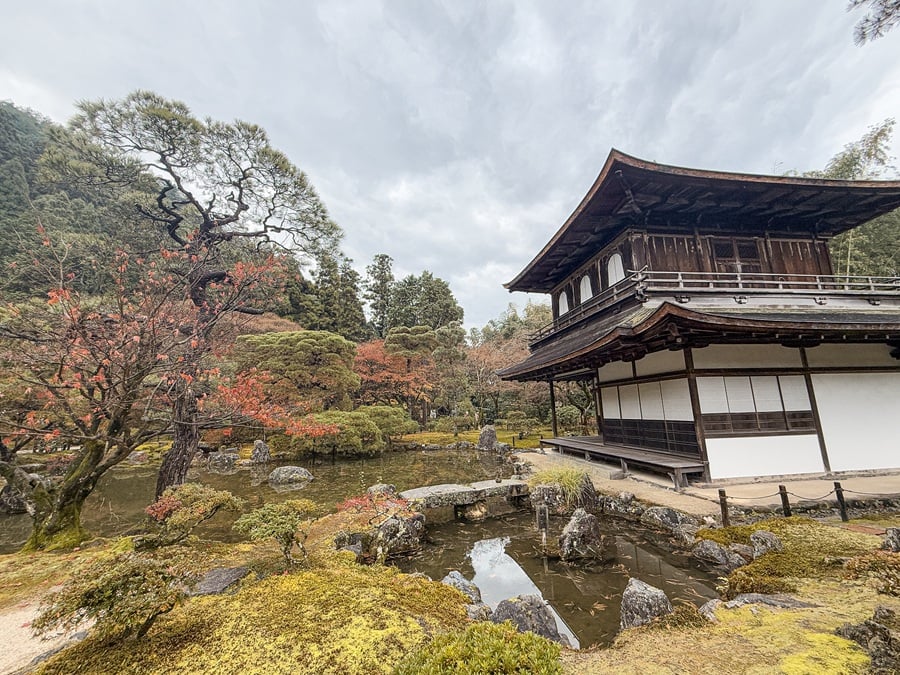
Ginkaku-ji was founded in 1482 by Ashikaga Yoshimasa as his retirement villa and became a Zen temple after his death. Despite the nickname Silver Pavilion, it is not silver but a restrained wooden structure with plaster finishing that reflects wabi-sabi aesthetics. The real draw is the mossy gardens and the karesansui, a raked sand garden that channels Zen calm.
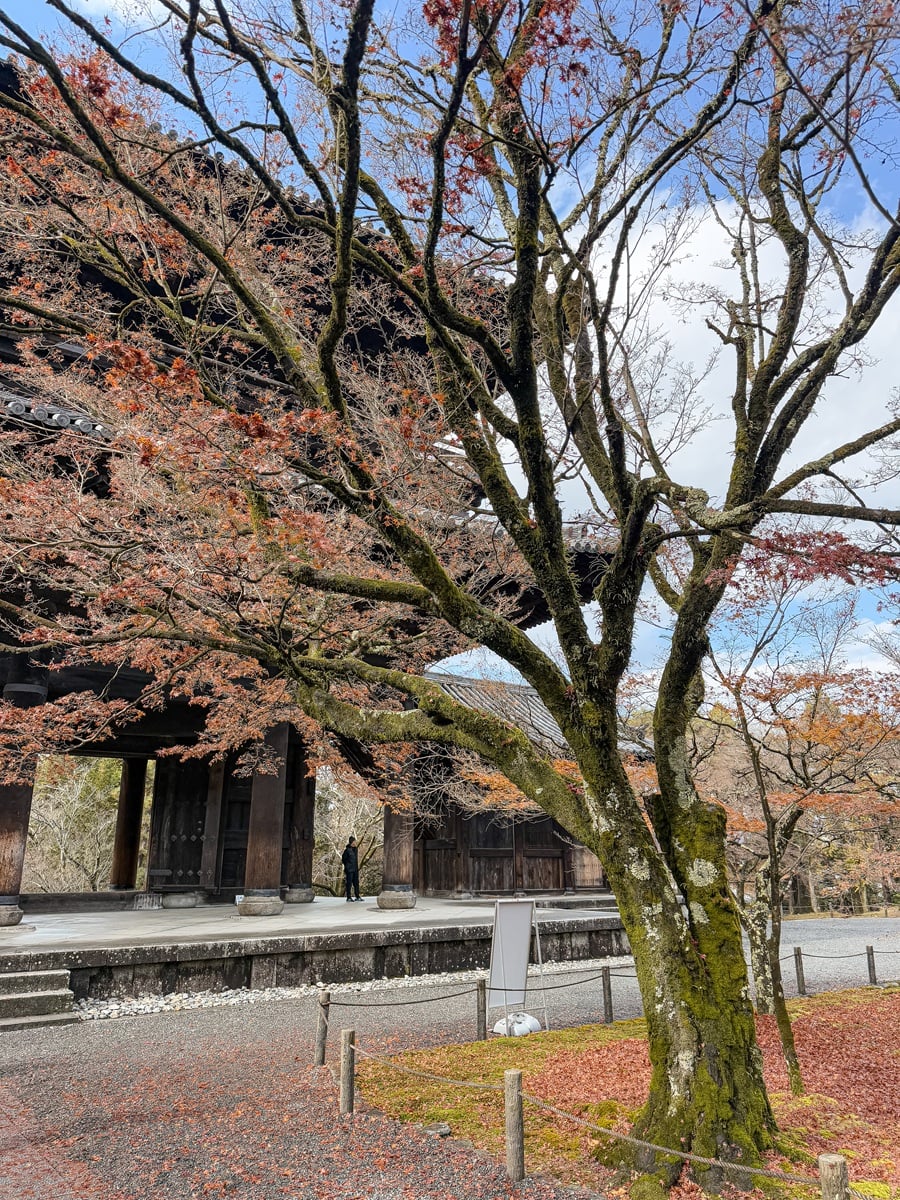
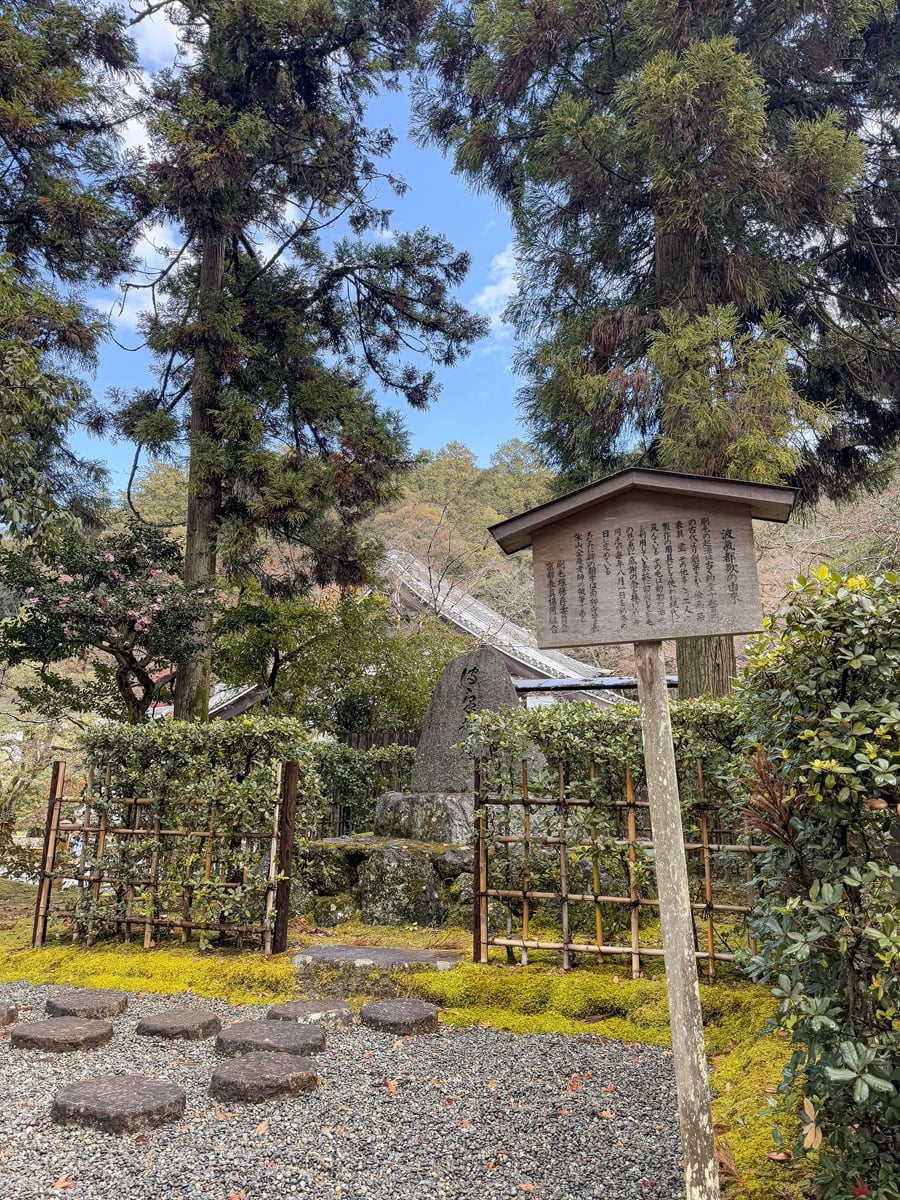
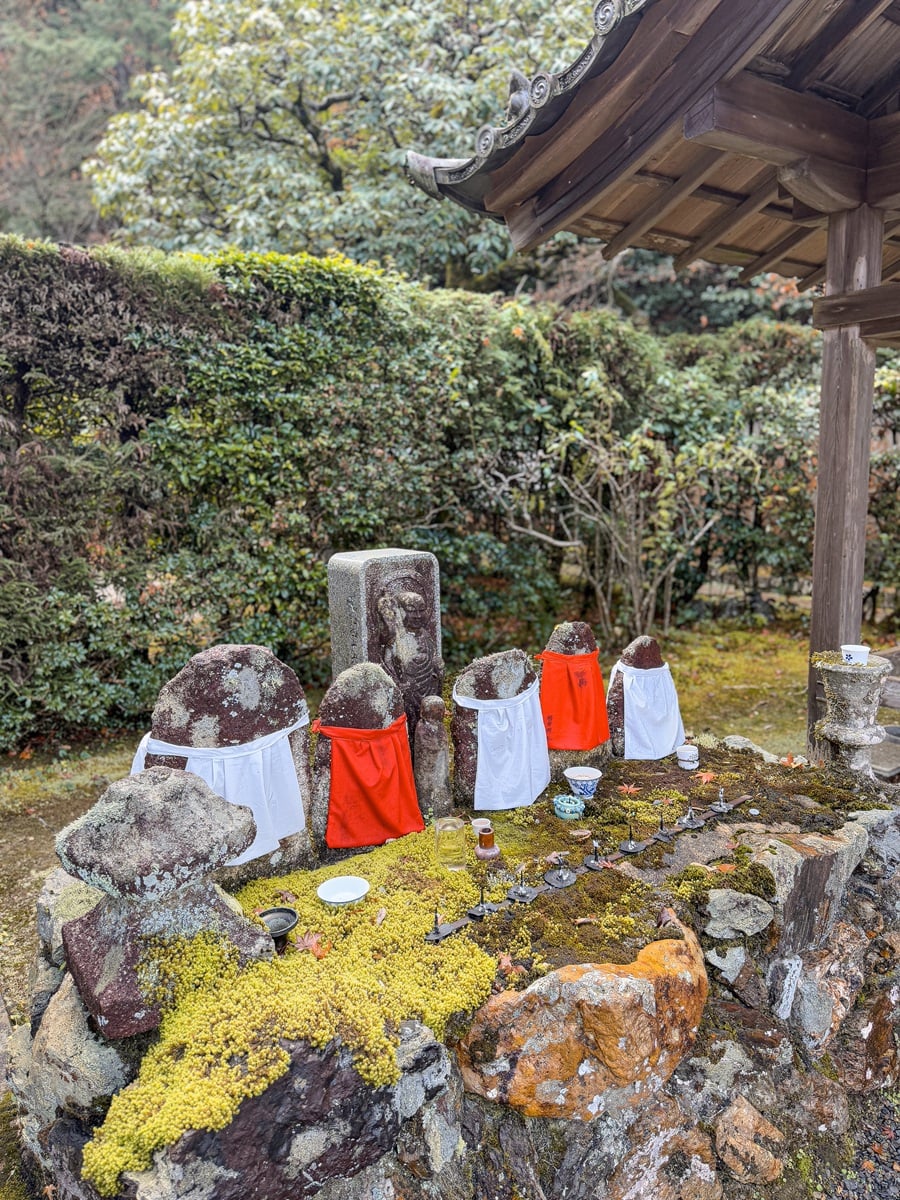
Tenjuan (Nanzen-ji complex)
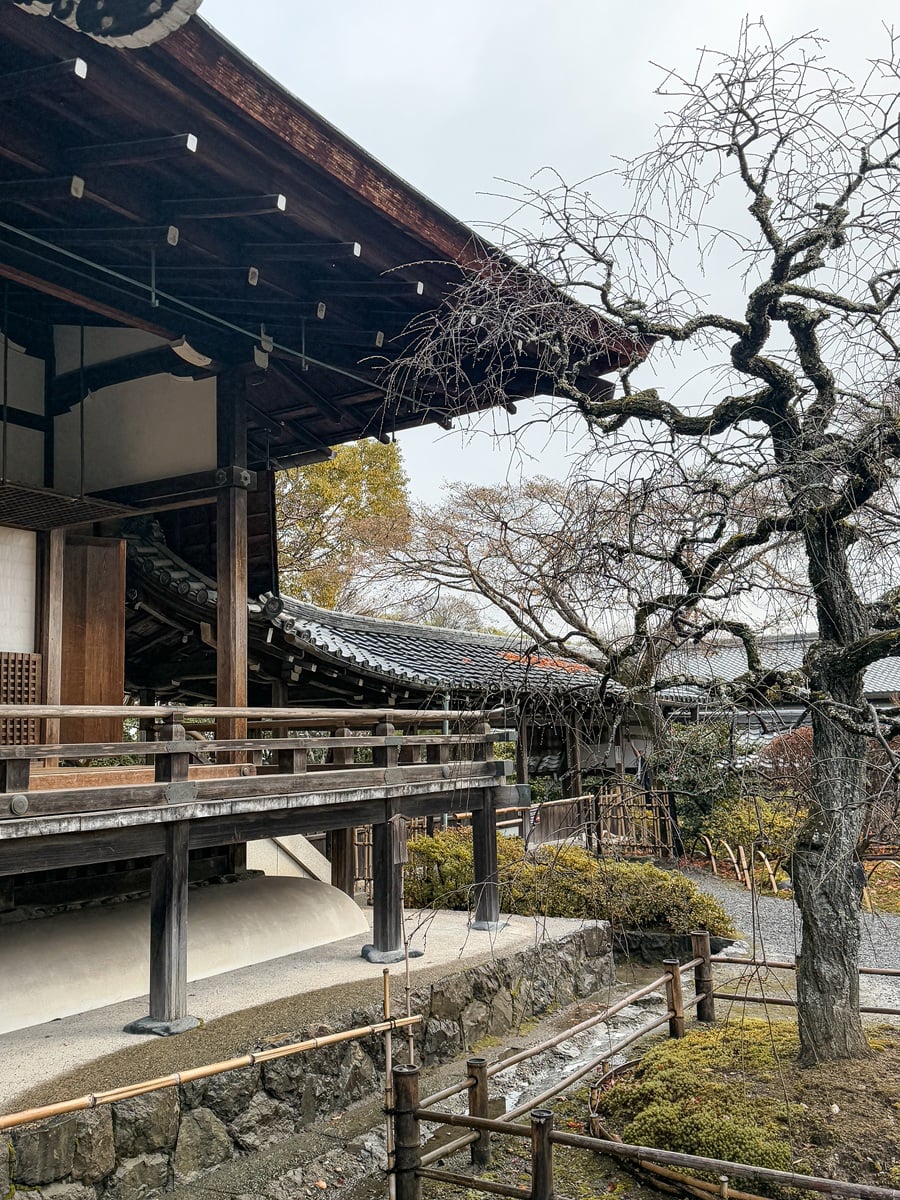
Tenjuan is a subtemple inside the larger Nanzen-ji complex, with origins tied to the 14th century and later reconstructions in the early 1600s. The pretty site is best known for two contrasting gardens: an austere dry garden near the main hall and a water garden that relies on seasonal streams and ponds. There’s also veranda seats that are great for just taking it all in, especially in autumn when maple leaves flame red.
Nijo Castle
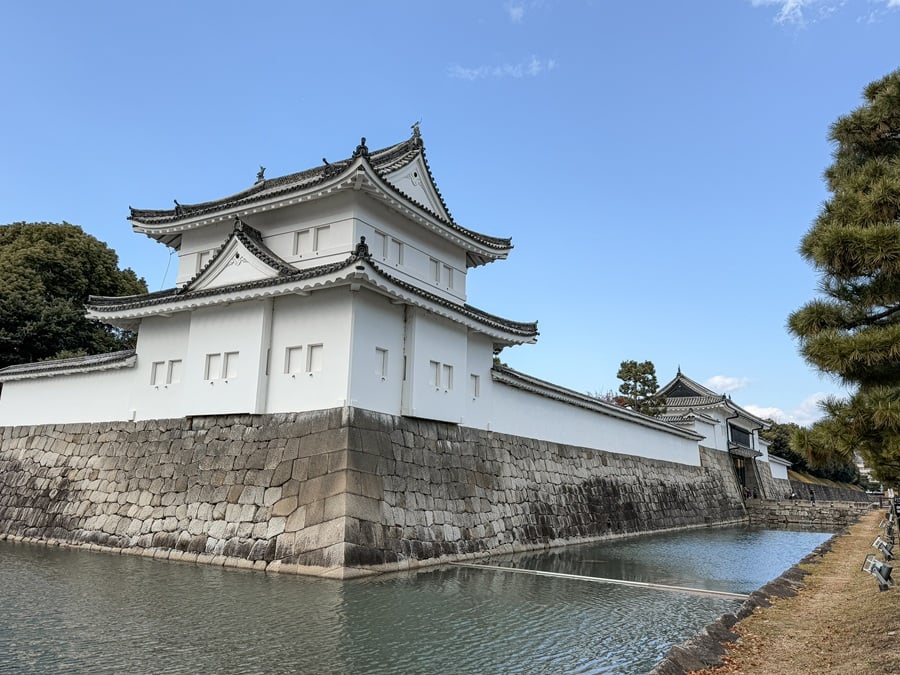
Nijo Castle served as the shogun’s Kyoto residence and is a UNESCO World Heritage Site. The complex includes massive moats, outer walls, and the Ninomaru Palace, famed for its nightingale floors that chirp when walked upon and sliding doors painted by Kano school artists. The layered gardens combine strolling paths with carefully placed pines and ponds.
Make sure you buy the ticket that includes the interior, because that’s where you’ll see the painted sliding doors and get the full experience.
Hanamikoji Street
Hanamikoji-dori threads through Gion, Kyoto’s historic entertainment district where wooden buildings and soft red lantern lights mix with the quiet buzz of restaurants opening for the night. Once home to teahouses where geisha performed, you might see a geisha today, but don’t go chasing that moment, appreciate the atmosphere first and any encounters second.
Shirakawa Canal
The Shirakawa Canal runs along the edge of Gion and dates back centuries, originally used to transport goods through the district. Today, it’s one of the prettiest and most peaceful corners of Kyoto. Stone paths line the water, willow trees dip into the canal, and traditional teahouses sit just behind them. If you can, come in the early evening when the lanterns start to glow.
Pontocho Alley
Pontocho Alley runs parallel to the Kamo River and is packed with narrow, traditional buildings that now house everything from tiny yakitori spots to multi-course kaiseki restaurants. Reservations for popular spots are wise, but dipping into a small izakaya is often the best option. Here’s a couple to try:
Arashiyama Bamboo Grove
The Arashiyama Bamboo Grove is a section of short walkways filled with towering bamboo stalks that became famous on social media, which means that it is packed with tourists. An early arrival is crucial if you want photos without crowds; we arrived at 8:00 and there were only a handful of people. A visit is perfectly paired with the nearby Tenryu-ji Temple.
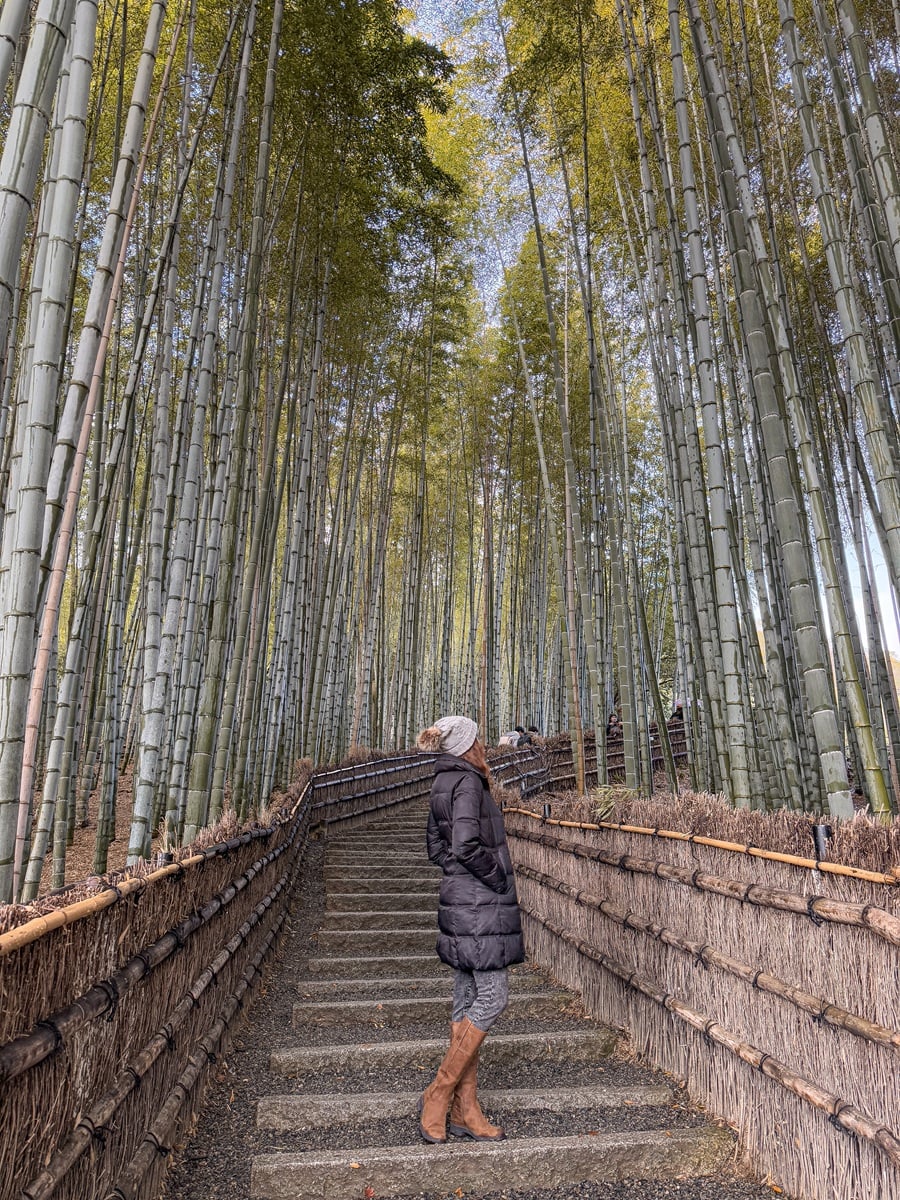
While you definitely should make a stop here, I actually preferred the bamboo path at Adashino Nenbutsu-ji Temple. It’s quieter, less crowded, and just as pretty.
Tenryu-ji
Tenryu-ji dates back to 1339 and is one of Kyoto’s most important Zen temples, but what stood out to me wasn’t the buildings, it was the garden. It’s designed around a central pond, and the surrounding mountains are intentionally part of the view, which means it changes with every season.
Otagi Nenbutsuji Temple
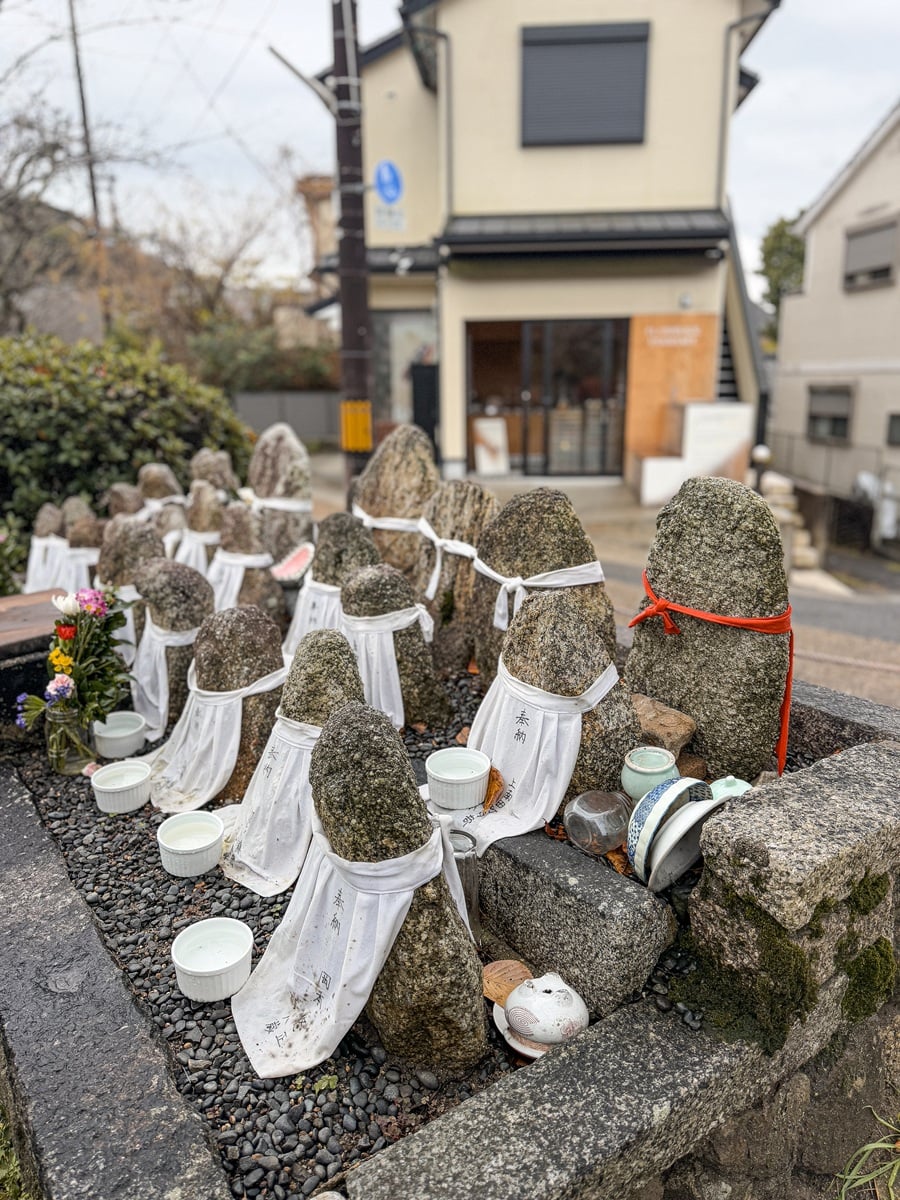
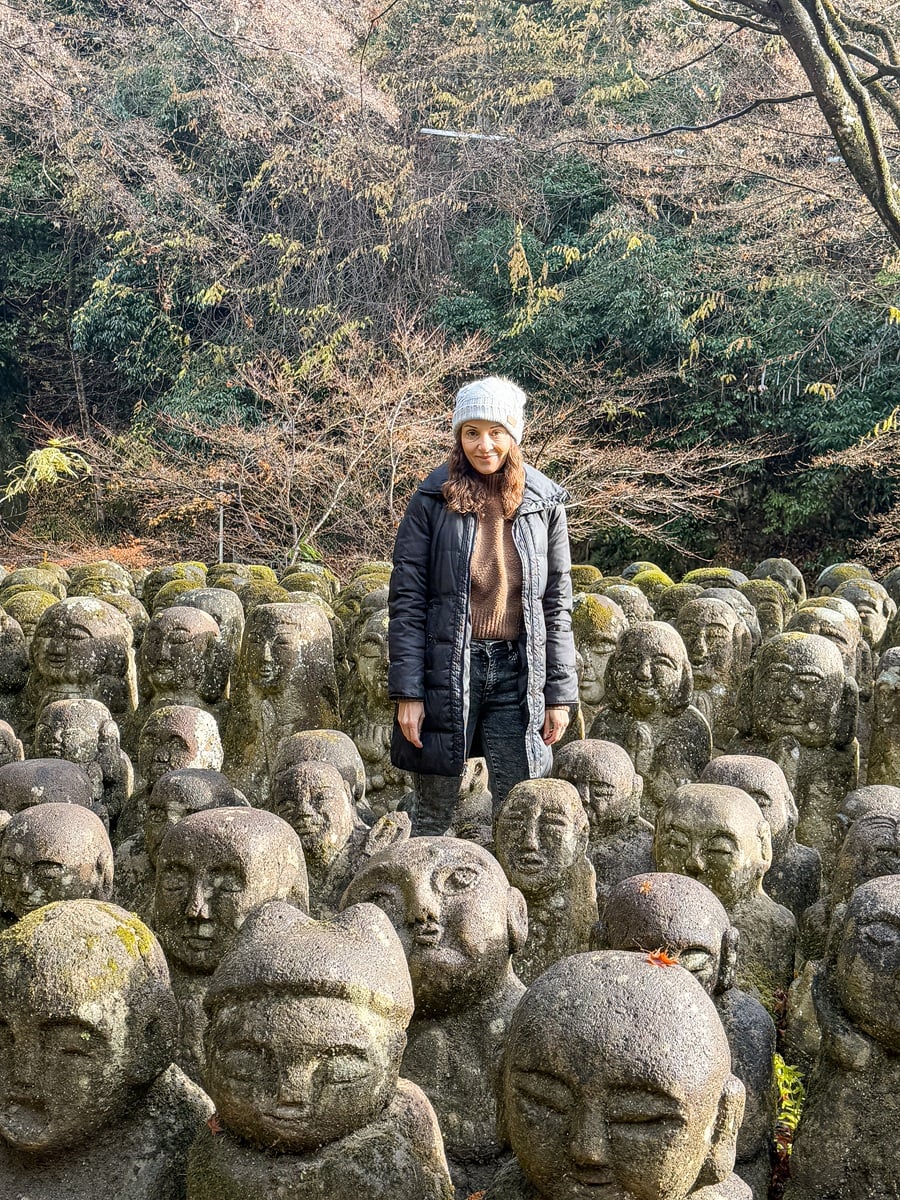
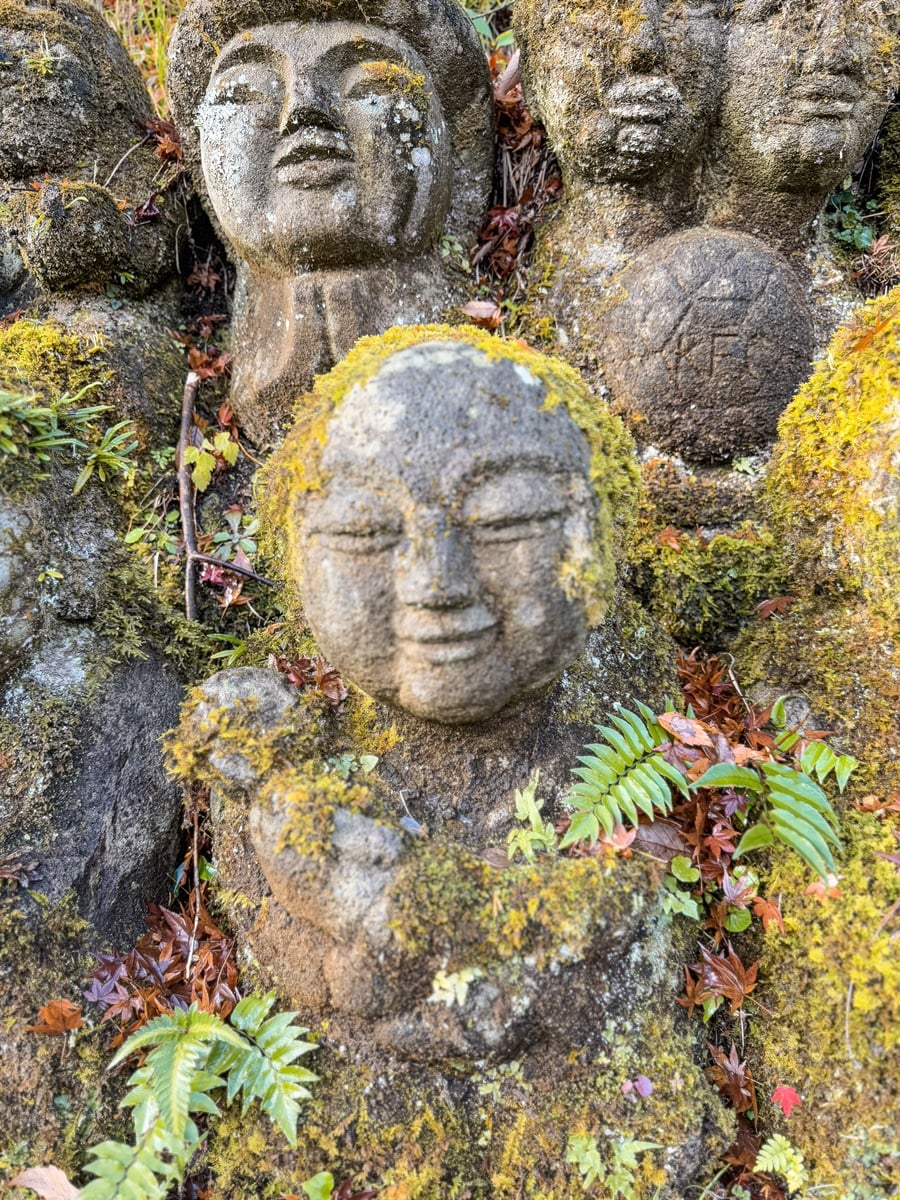
Otagi Nenbutsu-ji Temple has roots going back over a thousand years, but what you see today feels surprisingly playful. During a restoration in the 1980s, over a thousand stone statues were carved by different people, not master artists, just everyday individuals. And you can tell, because each one is a little bit different.
Some are smiling, some look a little mischievous, and a few genuinely made me laugh out loud. It’s also much quieter than most places in Kyoto, which makes it feel more personal. It’s a bit outside the main area, so take a taxi (or bus) and give yourself time to wander.
Kinkaku-ji (Water Temple)
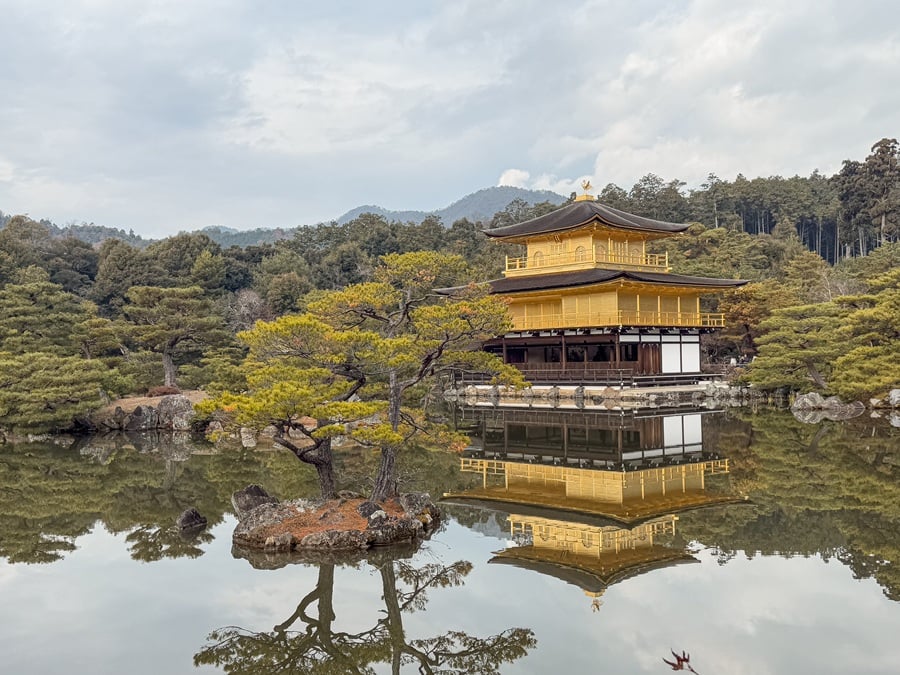
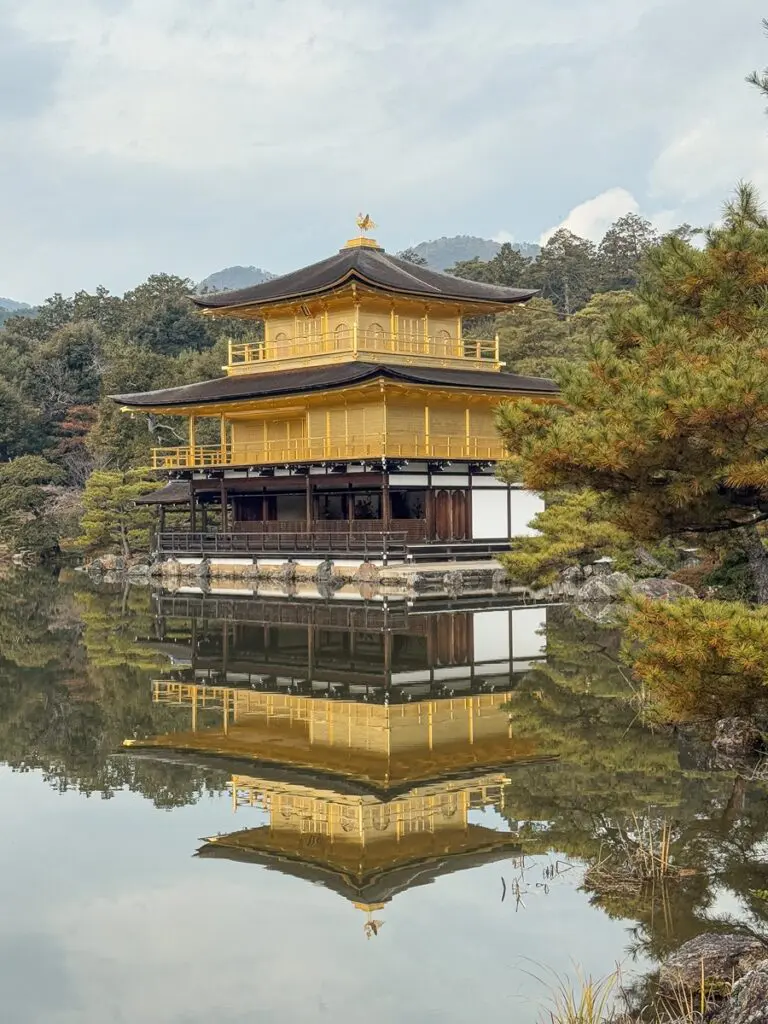
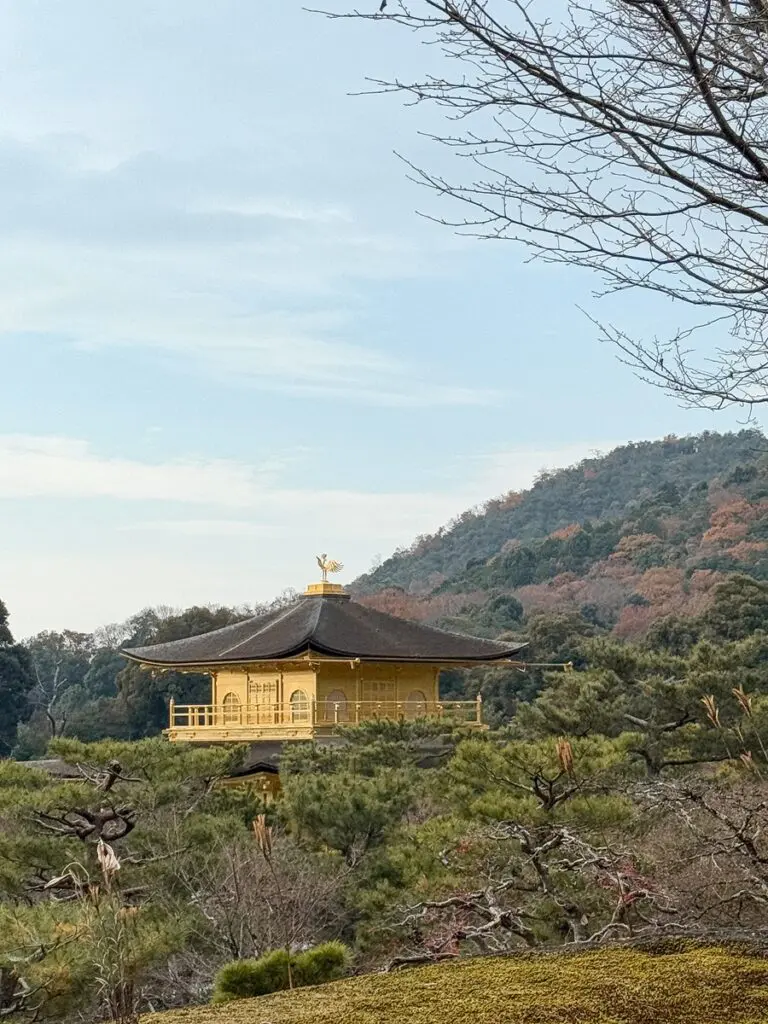
Kinkaku-ji is one of those places you’ve probably seen a hundred times in photos, but pictures can’t do it justice. Originally built in the 14th century as the retirement villa of shogun Ashikaga Yoshimitsu, what you see today is a reconstruction after past fires, but it stays true to that classic Muromachi style. The top two floors are covered in gold leaf, and when the light hits just right, you’ll see it shimmering in the reflection of the Kyoko-chi pond.
Walk Saga Toriimoto Street
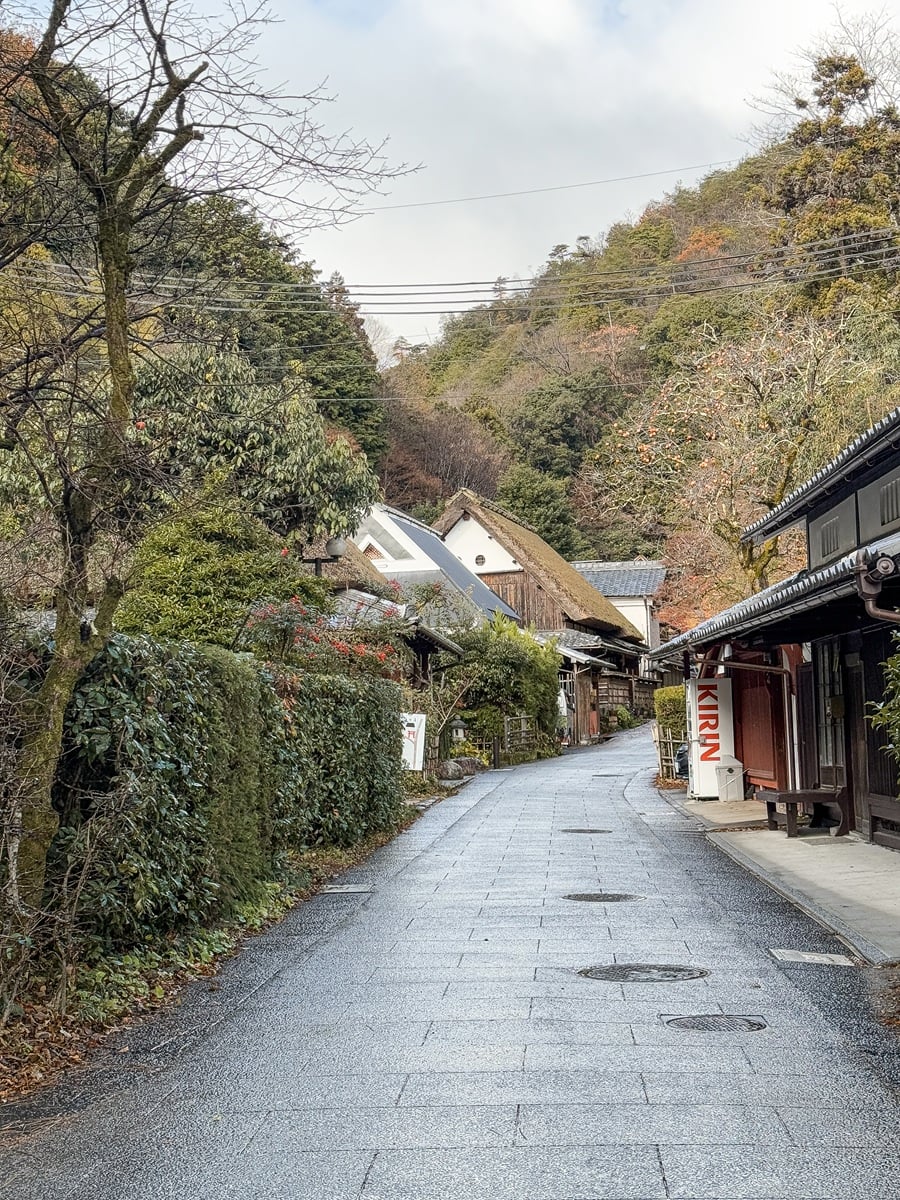
Saga-Toriimoto street preserves a slice of Meiji-era Kyoto with rows of machiya, narrow lanes, and understated storefronts that give you a glimpse into the city’s merchant past. This stretch near Arashiyama is less crowded than central attractions and the kind of place where you wander without a plan. Maybe you pop into a small pottery shop, peek inside a tiny tea house, or pick up a local sweet just because it looks good (which I fully support).
Tip: It’s not a far walk from Otagi Nenbutsuji Temple.
Adashino Nenbutsuji Temple
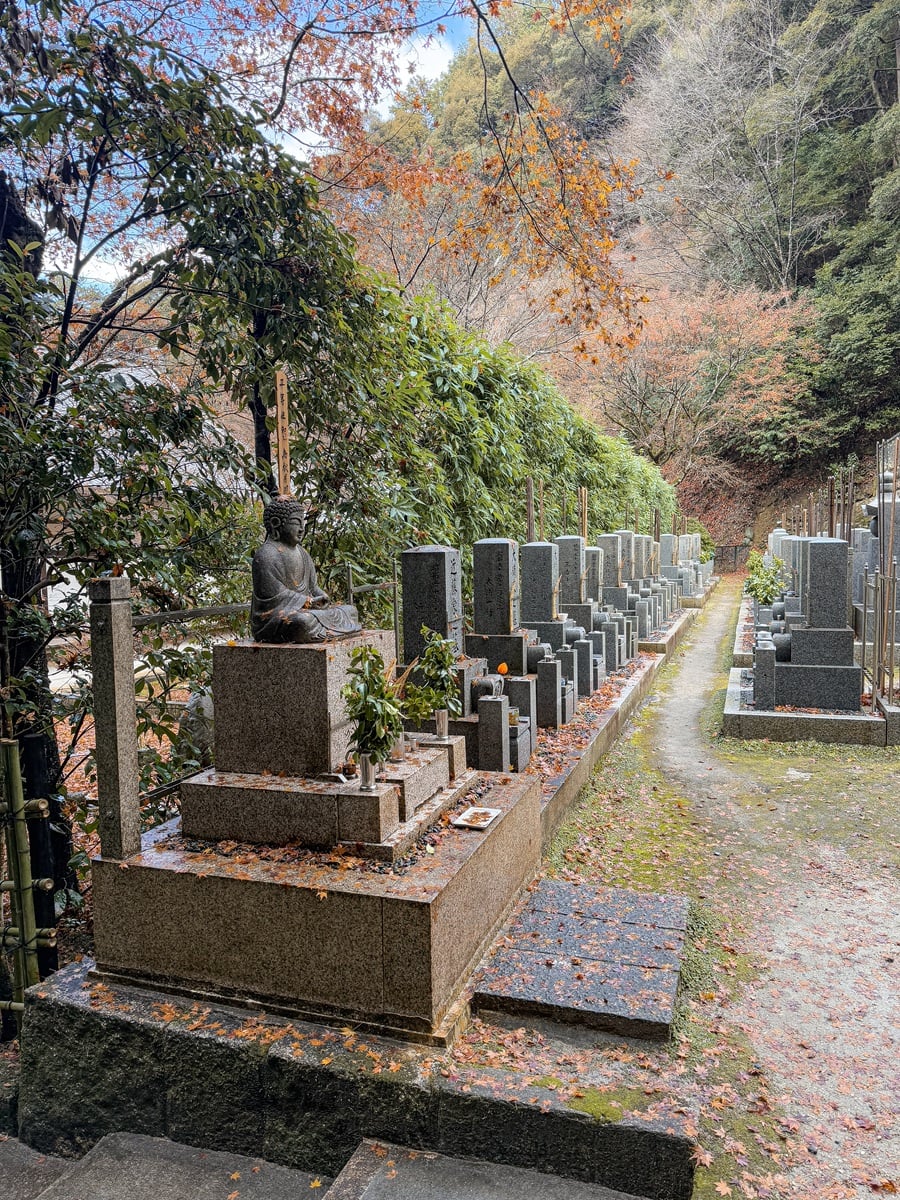
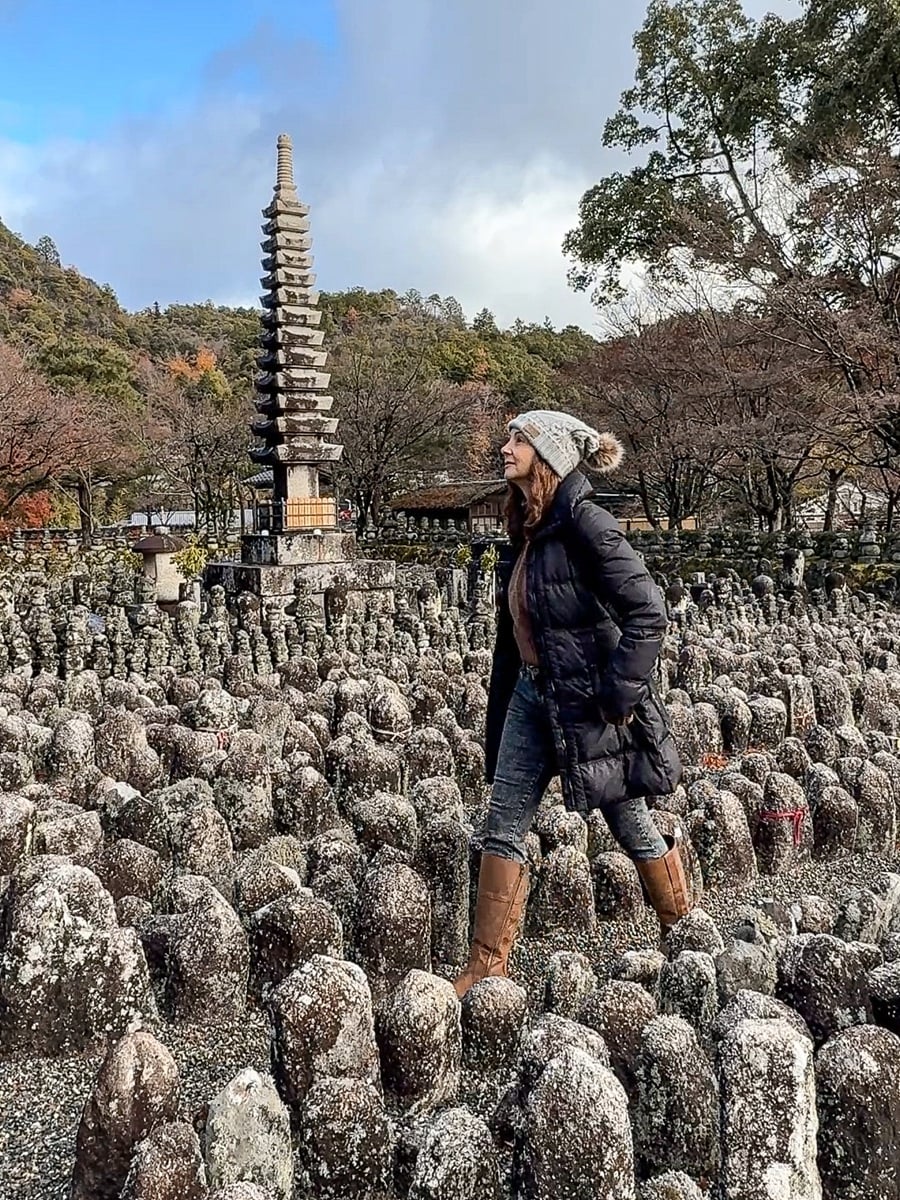
Adashino Nenbutsu-ji dates back to the Heian period and was originally a site for funeral rites. It is mainly known for thousands of small stone memorials that honor unknown souls. And then there’s the bamboo path. It’s not as famous as the main grove, but I actually liked it more. It’s smaller, much less crowded, and just as beautiful, maybe even more because you can actually take it in without the noise and crowds.
Gio-ji (Tiny Moss Temple)
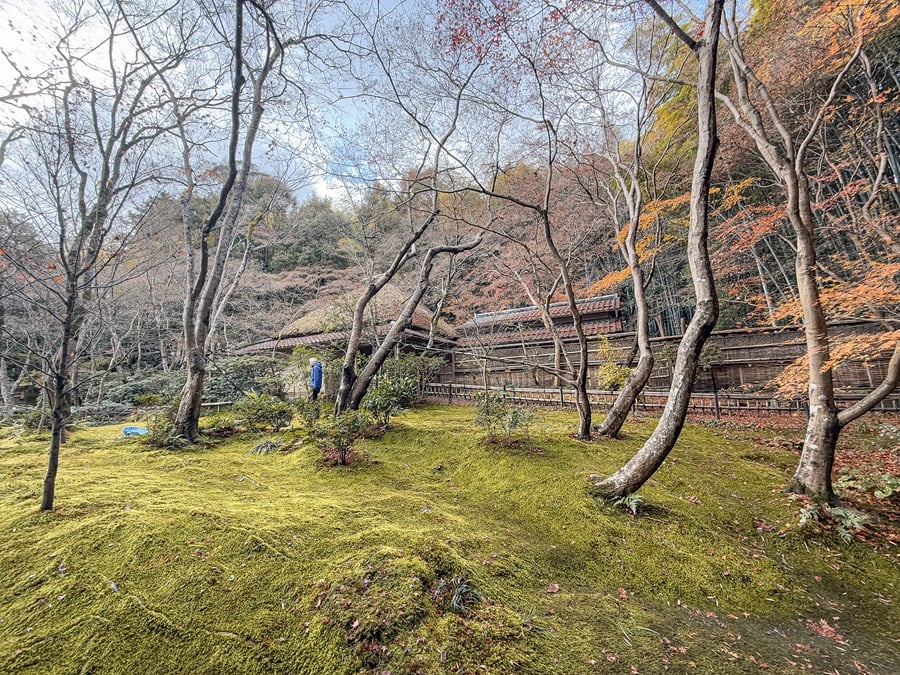
Gio-ji Temple is tiny, quiet, and incredibly easy to miss, which is exactly what makes it feel so special. The entire garden is covered in this soft, lush carpet of moss that wraps around the stone paths and trees, creating what feels like a little green sanctuary tucked away from everything else.
Fushimi Inari-Taisha
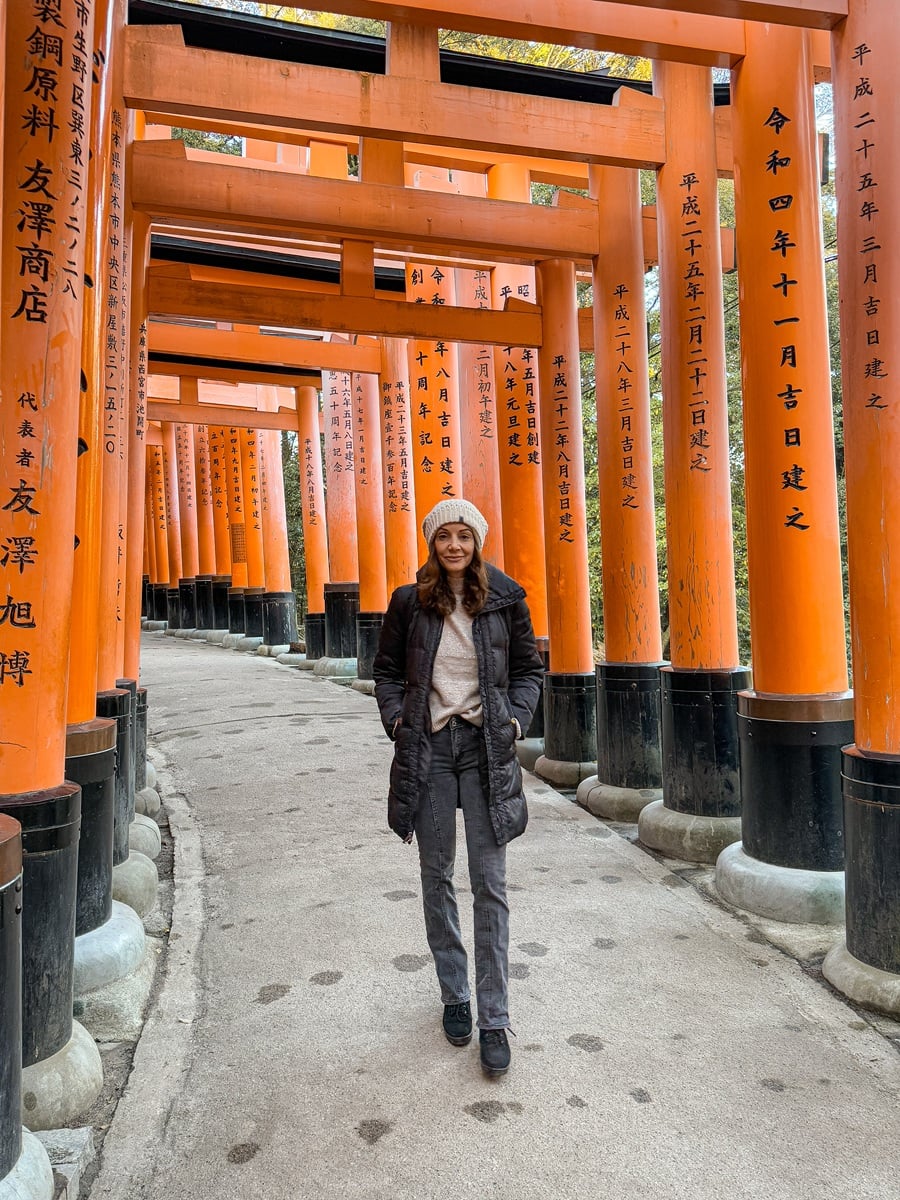
Fushimi Inari Taisha is one of those places you’ve definitely seen on Instagram, right up there with the bamboo grove, and it’s just as striking in person. Founded in the 8th century and dedicated to Inari, the kami of rice and prosperity, it’s famous for its thousands of bright vermilion torii gates that form these winding tunnels up Mount Inari. As you walk, you’ll pass smaller shrines, fox statues (they’re considered messengers), and occasional lookout points with views over the city.
You can hike the entire trail, which takes about two to three hours, but most people (myself included) go partway up, get those iconic views, and turn back.
➞ If you can, go early in the morning when there will be less crowds thin out, and definitely walk past the first set of gates (that’s where lots of the tourists hang out).
Eat Your Way Through Nishki Market
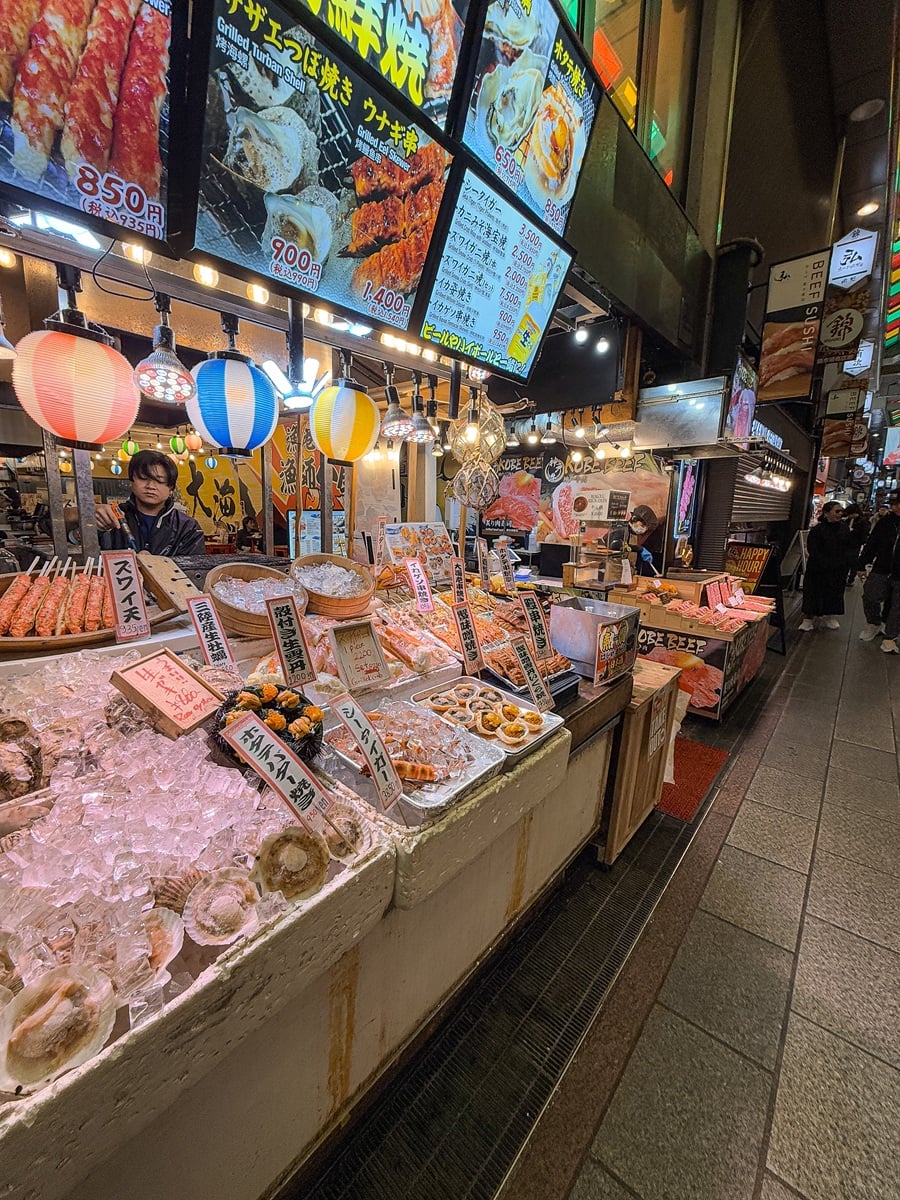
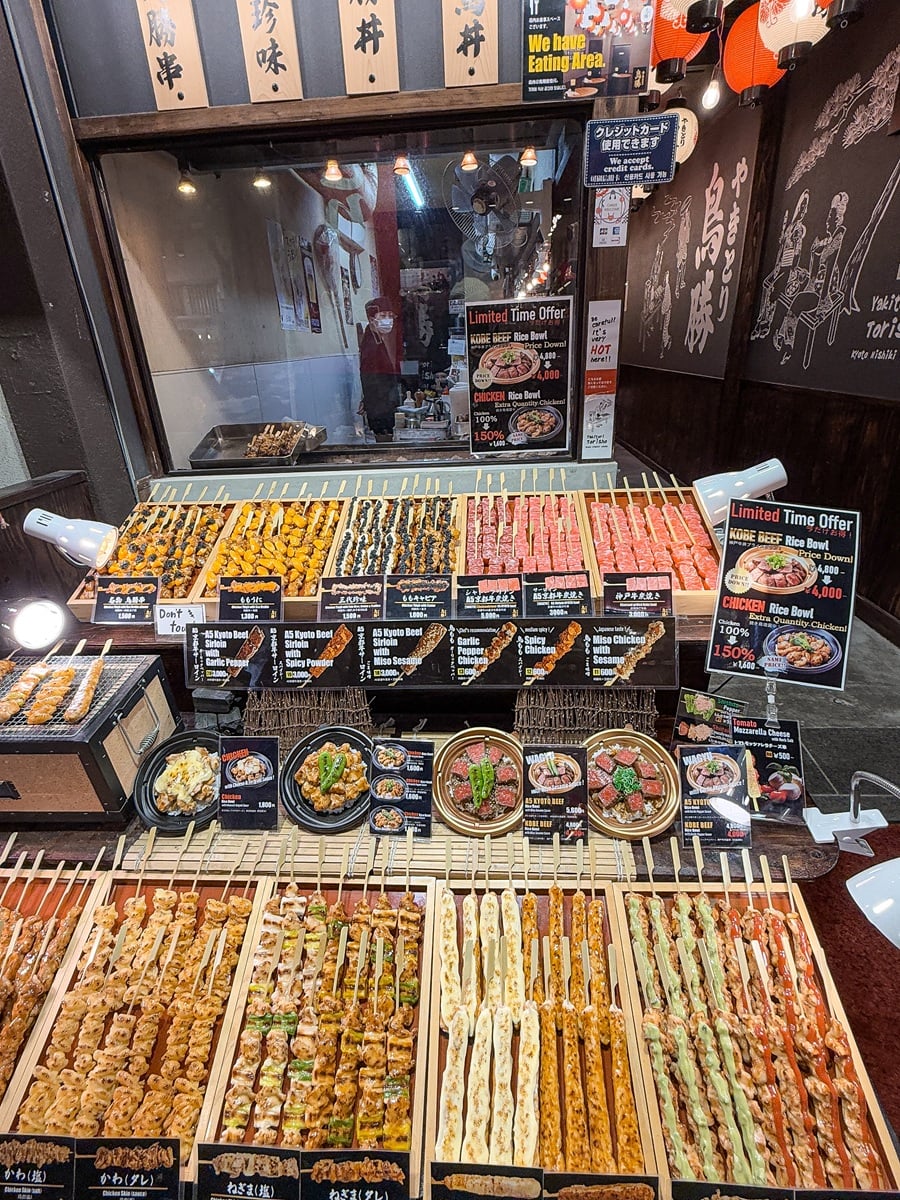
Nishiki Market has been around since the early 1600s, starting as a wholesale fish market before growing into what locals now call “Kyoto’s Kitchen.” It stretches for about five blocks and is packed with small, family-run stalls alongside newer food vendors serving everything from grilled skewers to tempura crab legs.
You can even pick up a few edible souvenirs or something fun for your kitchen (I brought home a set of the cutest ceramic chopstick holders shaped like origami cranes).
Where to Eat in Kyoto
The Kyoto food scene is impressive, so it is a place where you are going to want to enjoy by trying out lots of different places. These are my recommendations.
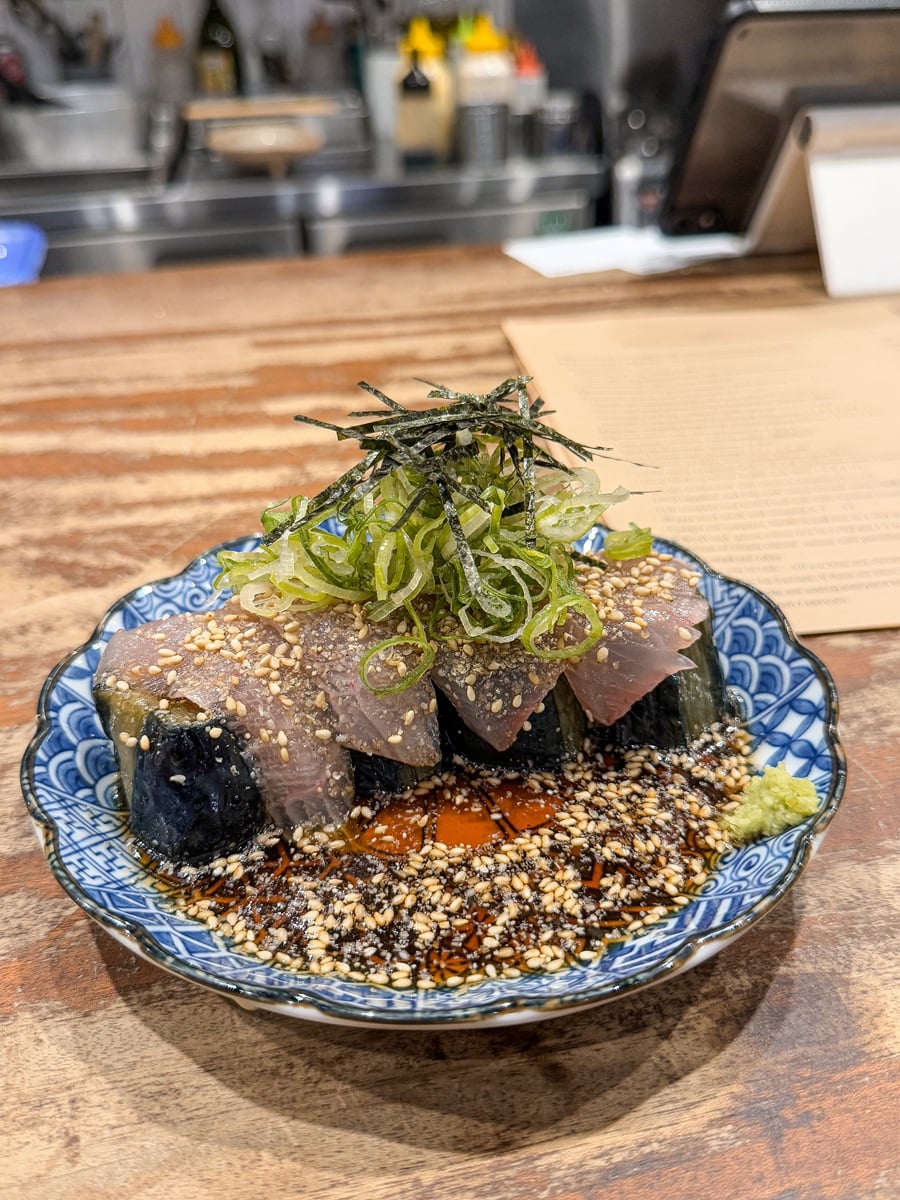
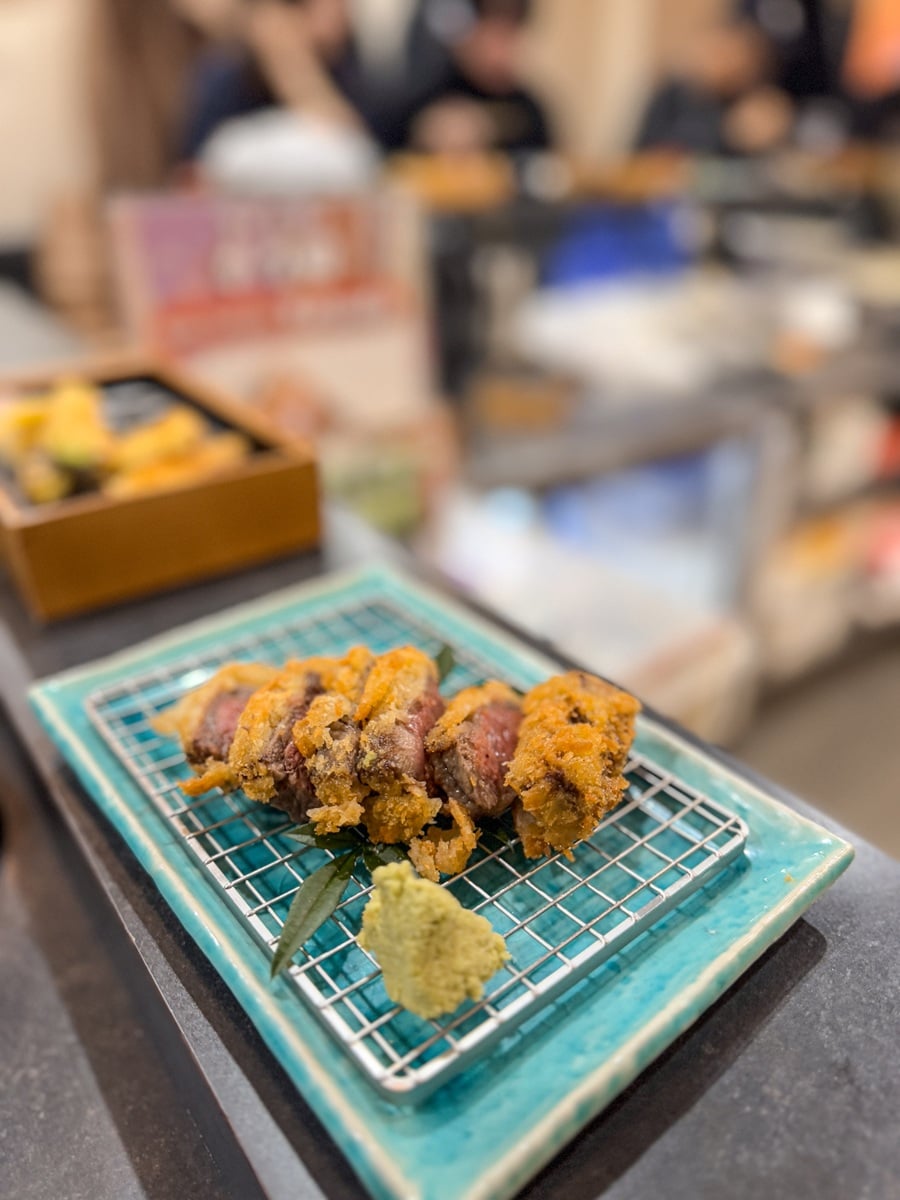
- Ashioto: This quickly became my favorite dinner spot in Kyoto. It’s a cozy izakaya where small plates are packed with flavor and creativity. We ordered six dishes, and while everything was incredible, the Tuna Cutlet with chive soy sauce stole the show.
- Noodle shop Rennosuke: A hidden ramen spot near Kinkaku-ji is a Bib Gourmand Michelin find. Everything was memorable
- Kyoto Tonkatsu Katsuda Shijokarasuma: A tiny katsu restaurant with a big reputation. The portions keep coming, everything is perfectly crispy, and it’s comfort food at its best.
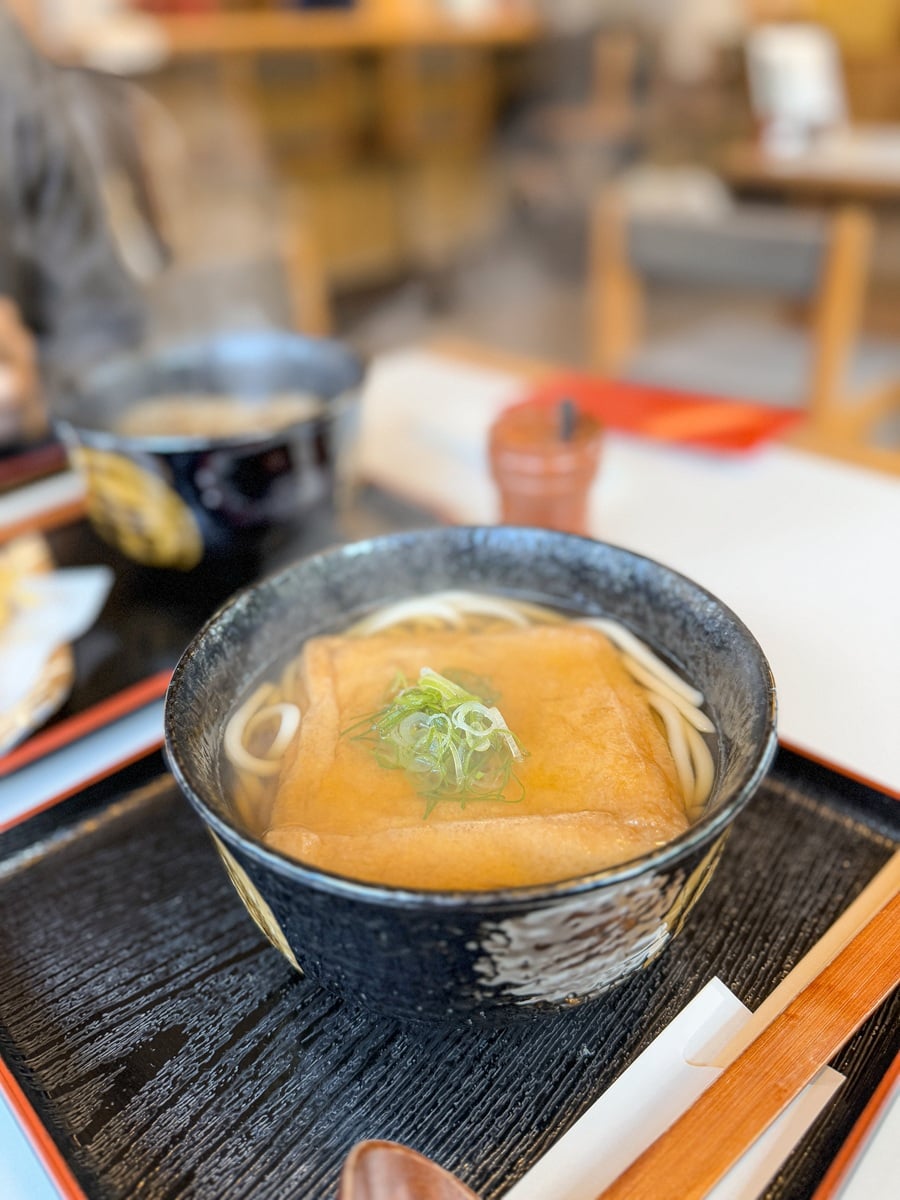
- Dangoro: A casual little noodle shop near the bamboo grove, specializing in soba and udon. We had an udon bowl and a soba one for under $15!
- MOTOI Gyoza: Quick, cheap, and delicious. I recommend the papas gyoza with shrimp and leek or the wagyu gyoza.
- Nakashimaya: A traditional obanzai-style restaurant, serving Kyoto-style home cooking. Seasonal vegetables, small plates, and local ingredients make it feel like you’re eating in a Kyoto home.
- Rokkaku Ace: A lively izakaya in Nakagyo-ku. We knew we had to try it when the sign said “fully booked” on our first night. The grilled shrimp is a must!
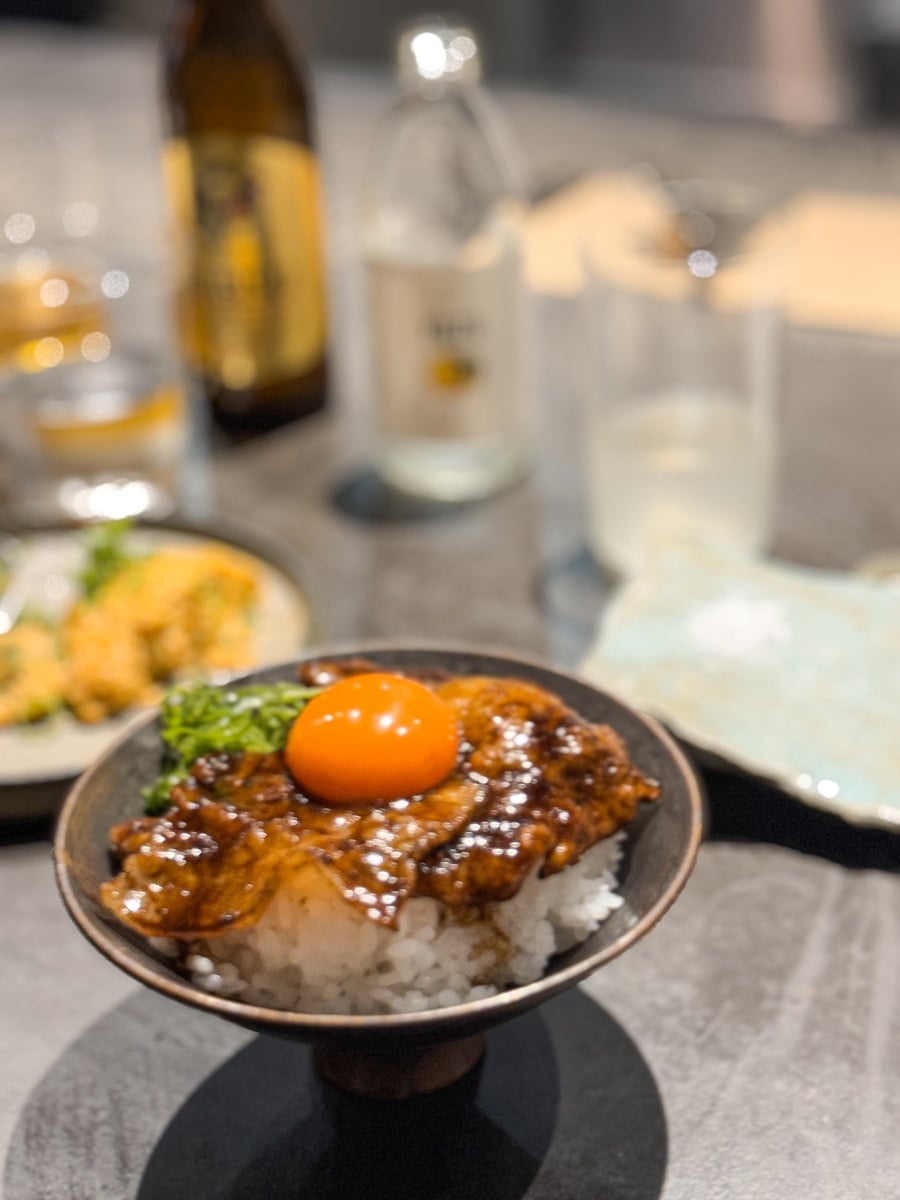
- Hikiniku to Come: For meat lovers, this is the spot! It specializes in charcoal-grilled hamburgers dedicated to freshly ground meat and freshly cooked rice.
- Monk: Monk is a small, intimate spot specializing in wood-fired pizzas and seasonal dishes, featured on Chef’s Table, so reservations are a must and hard to get.
Tea, Coffee & Treat Places
- amam dacotan: The bakery is packed with irresistible pastries, both sweet and savory.
- Asarte Coffee: A tiny coffee shop serving excellent coffee and irresistible pastries. Don’t miss the mandarin orange tart or the Yuzu and Earl Grey croissant.
- Fiveran: a pastry shop where you load up your little basket with fresh baked croissants and goodies.
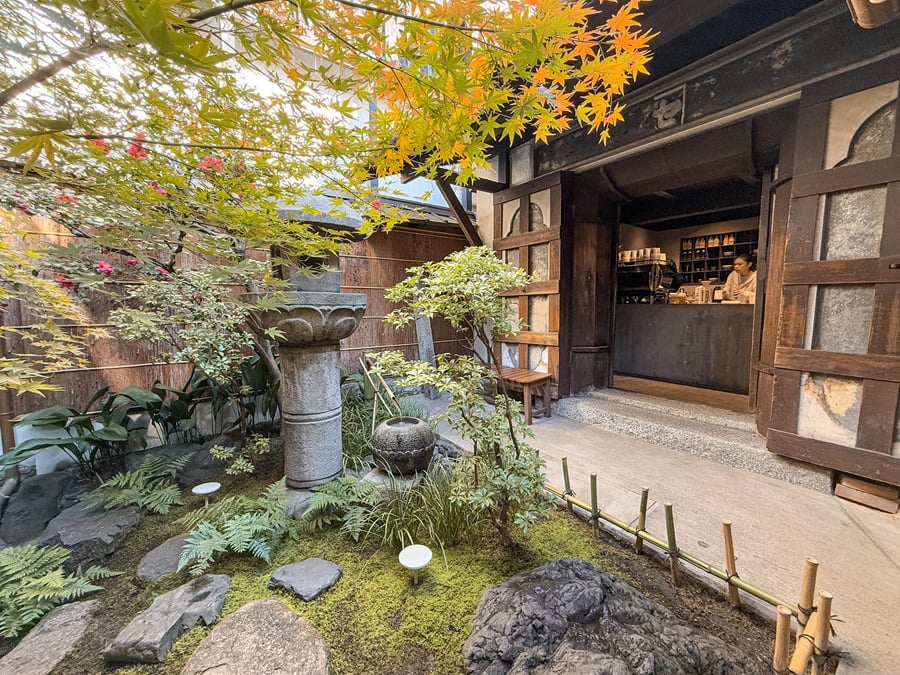
- Le Labo Cafe: Hidden behind Le Labo Perfumery, you’ll find this tiny café has a sweet little garden.
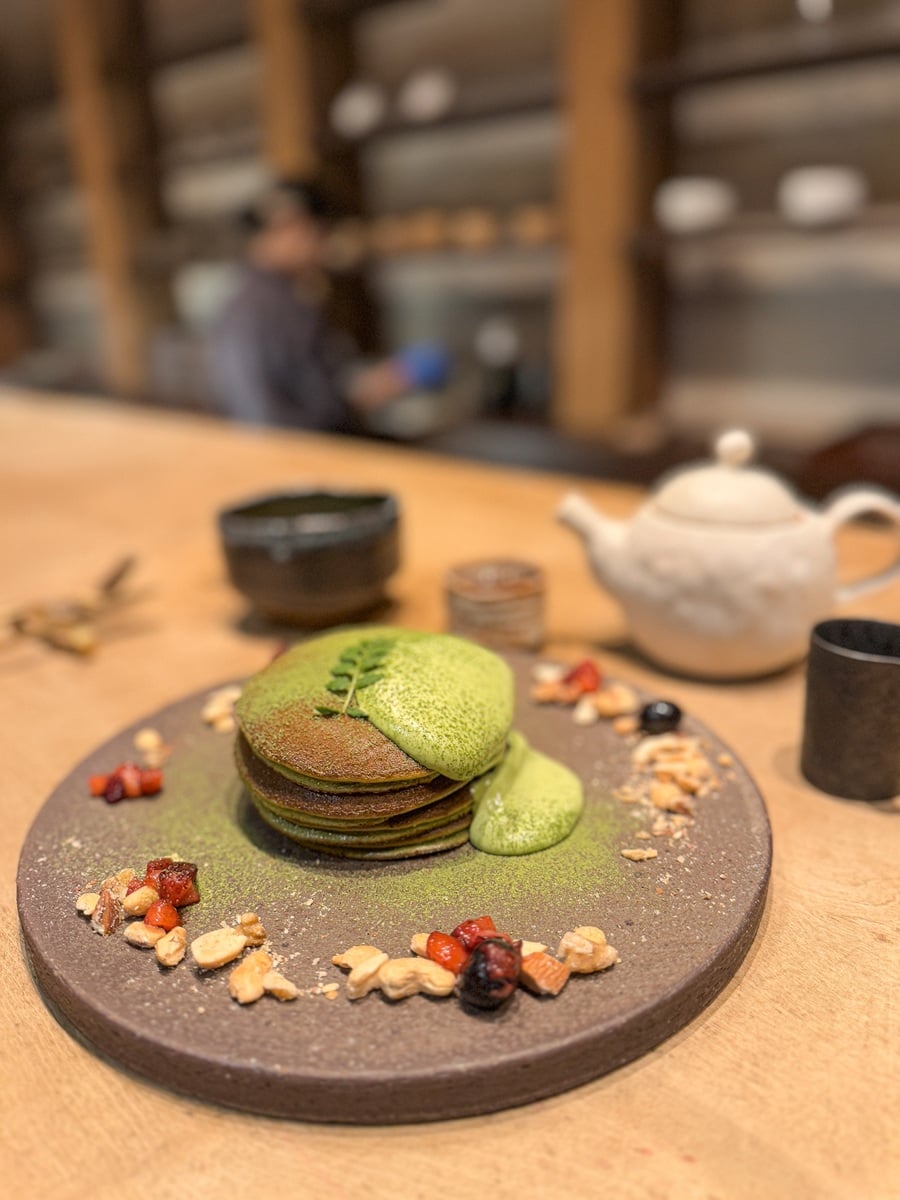
- nota Dorayaki & Black Tea: Try the matcha dorayaki which are the fluffiest pancakes.
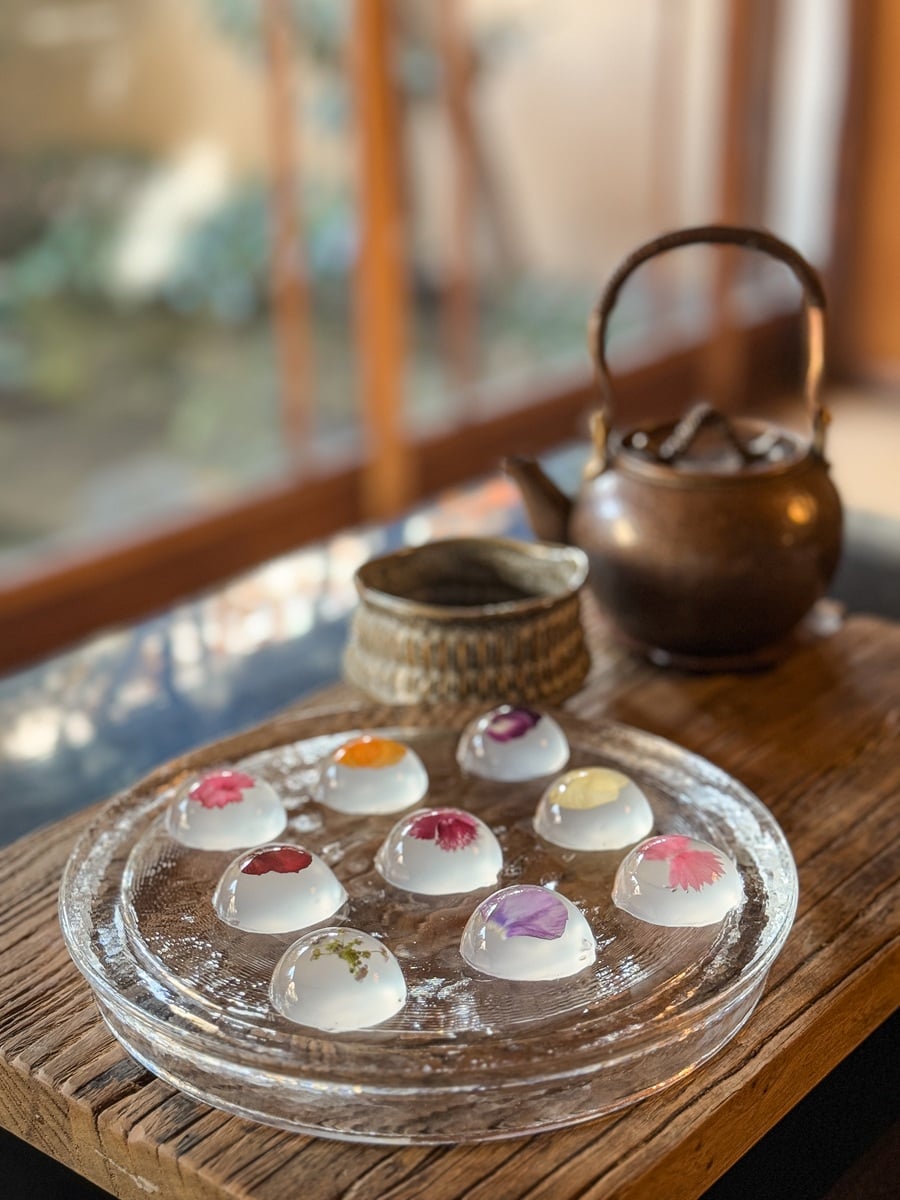
- Rokujuan: I couldn’t resist getting the hanawarabi (viral flower jelly). The flavor was just okay, but the experience is a 10/10.
- Stardust: A cozy spot for vegan food and raw sweets, offering treats like raw cashew cakes, vegan custard tarts, carrot cake, scones, and creamy panna cotta.
Tours to Take
If you don’t want to navigate the city on your own, or have an extra day or two there are a lot of great tours you can take (Viator has some of the best ones!). Here are a few I recommend:
Perfect Kyoto 1-Day Bus Tour: This is the one I’d tell you to book if you want to see a lot without overthinking a single detail. You’ll visit Kyoto’s biggest highlights like Kiyomizu-dera, Kinkaku-ji, and Fushimi Inari, all in one day, without figuring out transportation. It’s a full day, yes, but everything is organized for you. Just show up, sit back, and take it in.
World Heritage Kyoto & Nara Uji Authentic Matcha Experience: If the idea of navigating multiple cities in one day stresses you out, this tour removes all of that. You’ll visit Nara to see the famous bowing deer and the Great Buddha, then head to Uji for a proper matcha experience. It’s a really nice mix of culture, history, and something hands-on, which makes the whole day feel more memorable.
Gion Hidden Gems & Geisha Culture Tour: Gion is beautiful on its own, but I’ll be honest, there’s a lot you’ll walk right past without realizing it. This tour fills in those gaps. You’ll learn about geisha culture, wander the quieter streets, and hear the stories behind what you’re seeing. If you like understanding a place, not just looking at it, this one is worth it.
Nishiki Market Brunch Walking Tour: If you’re a little hesitant about what to eat or where to start, this is such an easy way in. You’ll try a variety of local foods with someone guiding you through it, which takes the pressure off ordering something unfamiliar.
Kimono Tea Ceremony at Kyoto Maikoya: For an immersive cultural experience, the Kimono Tea Ceremony lets you step into a traditional kimono before participating in a guided matcha ceremony. You’ll learn the customs, etiquette, and history behind this centuries-old ritual while preparing and enjoying matcha in a calm, intentional setting.
Traveling Soon? Use my Favorite Resources for Booking Your Trip!
Book Your Flight
Expedia is my favorite flight search engine, because it checks dozens of airlines so you can easily find the best fare deals. You can also select ‘Watch Prices’ to get an email alert when the prices change.
Book Your Accommodations
I use both Booking.com and Expedia for hotels, because each offers a couple different hotel choices and I like to compare the reviews on each one. If you have a group or are looking for more of a home atmosphere, head over to VRBO or AirBNB that has houses, apartments and even just a room for rent in every price range.
Book Your Rental Car
If love the freedom to explore like I do, driving from place to place is the best option! I always book with RentalCars.com (it’s part of booking.com) for the best prices and top brand options.
Book Some Fun Tours!
Viator and Get Your Guide are my go-to search engines for cool bucket list experiences! Each one can have different tours, so check both—why limit yourself, right?
Don’t Forget Travel Insurance
Travel can be unpredictable. Whether it’s a last-minute cancellation, an injury, or (ugh) theft, things happen. That’s why I recommend never leaving the country without travel insurance. Here are my faves: Safety Wing and World Nomads.
Get Packing & Travel Essentials Ready
Check out the Bucket List Journey Amazon Store to find all my favorite travel essentials. Everything from Packing cubes, to travel adapters and toiletry containers to walking shoes.
*Lastly, check travel.state.gov for visa requirements and safety information.
Save this Post to Pinterest